
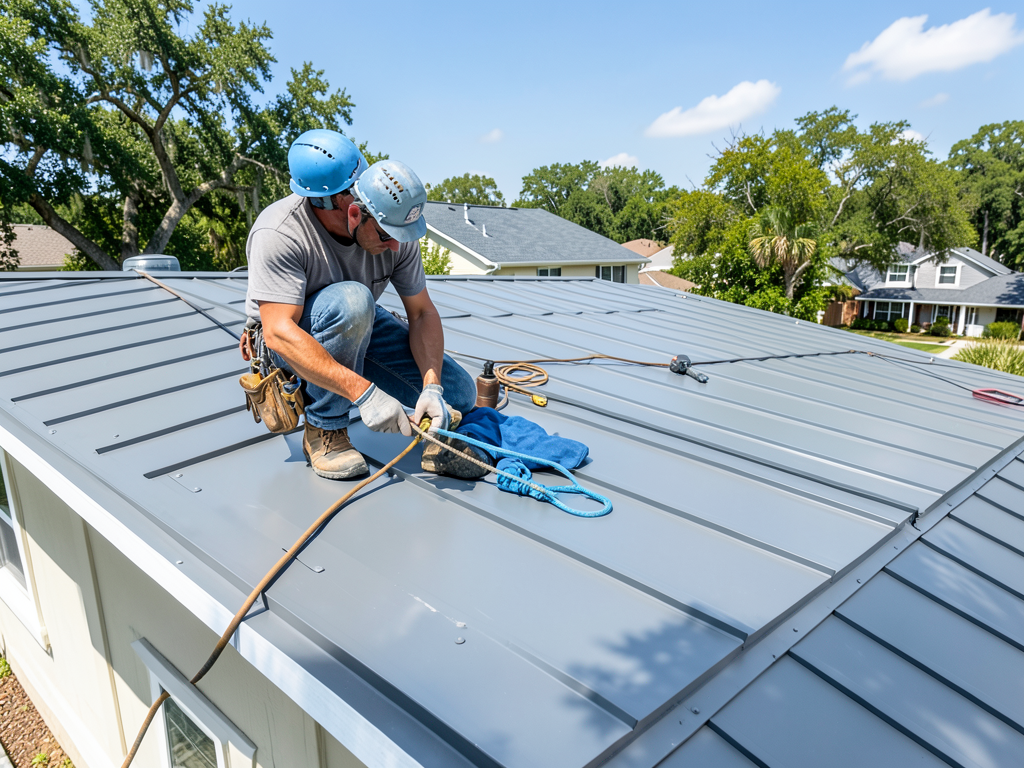
Does a Metal Roof Actually Make Your House Louder During a Tampa Storm?
Living in Tampa means dealing with intense afternoon thunderstorms and hurricane season. Many homeowners considering a metal roof installation worry about noise levels during these heavy downpours. The short answer: a properly installed modern metal roof is actually quieter than you might expect.
Today’s metal roofing systems use solid sheathing, advanced underlayment, and proper insulation to dramatically reduce sound transmission. Unlike the old barn-style metal roofs you might imagine, contemporary installations create a barrier that absorbs and dampens rain noise effectively. Choosing the Best Roofing Contractor for Your Westchase Home.
The Science Behind Metal Roof Sound
When rain hits a roof, the sound you hear depends on several factors working together. Understanding these elements helps explain why modern metal roofs perform so well in Tampa’s climate.
Decibel Comparison: Metal vs. Other Roofing Materials
Sound levels vary significantly between roofing materials. Here’s how different roof types compare during heavy rain: Roofing Dunedin.
| Roof Type | Average Decibel Level (Heavy Rain) | Sound Quality |
|---|---|---|
| Asphalt Shingles | 40-50 dB | Soft pattering |
| Metal Roof (Modern) | 45-55 dB | Controlled drumming |
| Metal Roof (No Insulation) | 60-70 dB | Loud pinging |
| Tile Roof | 35-45 dB | Deep thudding |
The key difference lies in installation quality. A metal roof with proper decking and insulation performs nearly identically to asphalt shingles in terms of noise levels.
Sound Dampening Factors in Modern Metal Roofs
Several components work together to reduce noise in contemporary metal roofing systems: Roofing Saint Petersburg.
Solid Roof Decking
Modern metal roofs install over solid plywood or OSB decking, unlike older installations that attached directly to rafters. This solid layer acts as a sound barrier, absorbing vibrations before they enter your home.
Advanced Underlayment Materials
Synthetic underlayment provides superior sound dampening compared to traditional felt. Products like polyethylene foam underlayment can reduce noise transmission by an additional 3-5 decibels.
Attic Insulation Impact
Your attic insulation plays a crucial role in sound control. Fiberglass batts and spray foam insulation both absorb sound waves effectively. Homes with R-30 or higher attic insulation experience significantly less roof noise.
Fastening Systems Matter
Standing seam metal roofs with concealed fasteners produce less noise than exposed fastener systems. The hidden clips allow for thermal expansion without creating vibration points that amplify sound.
Tampa-Specific Installation Considerations
Tampa’s unique climate requires specific installation techniques that also enhance noise reduction:
Ventilation and Sound Control
Florida’s heat and humidity demand proper attic ventilation. Ridge vents and soffit vents not only prevent moisture buildup but also create air gaps that help dissipate sound energy. Florida Building Code.
Hurricane Code Compliance
Florida Building Code Section 1609 requires specific wind resistance ratings for roofing in coastal areas. These requirements include enhanced fastening patterns that actually improve sound dampening by reducing roof movement during storms.. Read more about Why Fire-Rated Roofing Materials are a Must for Rural Properties in Thonotosassa.
Thermal Expansion Management
Metal expands and contracts with temperature changes. Professional installers use expansion clips and proper spacing to prevent the popping sounds that can occur with amateur installations.
Common Metal Roof Noise Myths Debunked
Let’s address the most persistent misconceptions about metal roof sound:
Myth: Metal Roofs Sound Like a Drum During Rain
Reality: Modern installations with solid decking sound similar to asphalt shingles. The solid surface prevents the hollow, drum-like effect.
Myth: You’ll Hear Every Hailstone
Reality: Metal roofs actually deaden hail impact better than many other materials. The sound is comparable to light rain on a shingle roof.
Myth: Metal Roofs Are Always Louder
Reality: When properly installed with current materials, metal roofs can be quieter than poorly installed shingle roofs.
Sound Quality: The Unexpected Benefit
Many Tampa homeowners discover an unexpected benefit: they actually enjoy the sound of rain on their metal roof. The consistent, soothing patter creates a white noise effect that masks other sounds and can improve sleep quality.
The key is achieving the right sound profile. You want a muted, pleasant sound rather than a harsh, tinny ping. This comes down to material selection and installation quality.
Noise Reduction Checklist for Tampa Homes
Before installing a metal roof, ensure your contractor addresses these sound control elements:
- Solid Decking Verification
Confirm 7/16″ or thicker plywood/OSB decking throughout the roof area.
- Premium Underlayment
Specify synthetic underlayment with sound-dampening properties.
- Attic Insulation Assessment
Ensure R-30 or higher insulation in the attic space.
- Standing Seam Selection
Choose concealed fastener systems for optimal noise control.
- Expansion Management
Verify proper clip spacing for thermal movement.
- Ventilation Planning
Include adequate ridge and soffit ventilation.
Diagnostic Sound Testing During Installation
Professional metal roof installers use specific diagnostic techniques to ensure optimal sound performance:
During installation, experienced technicians perform a “tap test” on the decking before metal installation. They check for solid connections at every fastener point and listen for hollow spots that could amplify sound. They also verify that underlayment seams overlap correctly to prevent sound transmission through gaps.
After installation, a final sound check involves walking the roof surface to identify any loose panels or fasteners that could create vibration points during storms.
Cost Considerations for Sound Control
Sound-dampening upgrades typically add $1,500-$3,000 to a standard metal roof installation. However, this investment often pays for itself through:
- Improved energy efficiency from better insulation
- Increased home value due to premium installation
- Enhanced comfort during Florida’s frequent thunderstorms
Making Your Decision
The noise concern shouldn’t prevent you from considering a metal roof’s many benefits: longevity, energy efficiency, and storm resistance. With proper installation, the sound difference between metal and other roofing materials becomes negligible.
For Tampa homeowners, the real question isn’t “Will it be loud?” but rather “How can we ensure it sounds just right?”
Frequently Asked Questions
Is a metal roof louder than shingles during a storm?
When properly installed with solid decking and insulation, a metal roof sounds very similar to asphalt shingles during rain. The key is using modern installation techniques rather than old-style direct-to-rafter mounting.
How can I make my metal roof quieter?
Focus on solid decking, premium synthetic underlayment, and adequate attic insulation. Standing seam systems with concealed fasteners also reduce noise compared to exposed fastener panels.
Does hail make metal roofs sound terrible?
Metal roofs actually dampen hail impact better than many materials. The sound is typically a soft pattering, similar to light rain on a shingle roof, not the loud pinging many people imagine.
Are there specific metal roof types that are quieter?
Standing seam roofs with concealed fasteners and stone-coated steel products tend to be the quietest options. These systems minimize vibration points and provide better sound dampening.
Will I hear expansion and contraction noises?
Professional installation using proper expansion clips prevents the popping sounds that can occur with amateur work. Quality installers account for thermal movement in their design.
Ready to Experience the Benefits of a Modern Metal Roof?
Don’t let noise concerns prevent you from enjoying the durability and energy efficiency of a metal roof. Our Tampa-based team specializes in installations that sound as good as they perform.
Call (656) 245-0955 today to schedule your free inspection and sound consultation. We’ll show you exactly how your new metal roof will perform during Tampa’s next thunderstorm.
Pick up the phone and call (656) 245-0955 before the next storm hits. Your neighbors with noisy old roofs will wish they’d called sooner. For more information, visit EPA energy efficiency guidelines.
You may also find this helpful. Why Your Oldsmar Home Needs a Roof That Can Handle Salt Spray and High Winds.
You may also find this helpful. How to Protect Your Keystone Estate from Lightning Damage to the Roof.