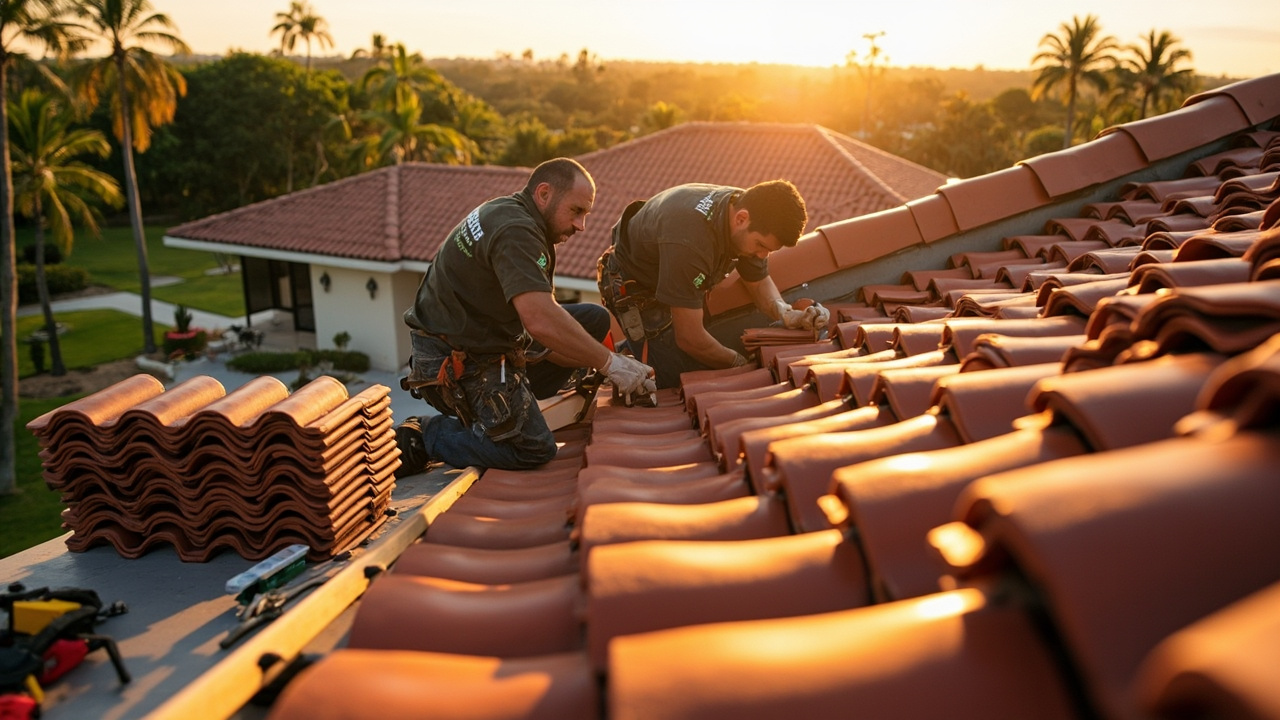
Tampa sits in a high-velocity hurricane zone where wind uplift can exceed 150 miles per hour during major storms. Tile roofing systems must meet specific fastening requirements that differ from installations in Central Florida or the Panhandle. Salt air from Tampa Bay accelerates corrosion of metal flashing and fasteners, which means tile roofing contractors must use corrosion-resistant materials rated for coastal exposure. High humidity keeps underlayment damp for extended periods, which degrades cheap felt paper in 18 to 24 months. Your tile roof needs installation methods and materials designed specifically for Tampa's exposure category and climate conditions, not generic approaches that work in drier or calmer regions.
Hillsborough County building inspectors enforce strict compliance with the Florida Building Code for tile roof installation and tile roof replacement projects. They verify fastener type and spacing, check underlayment laps, and confirm proper flashing integration at roof-to-wall transitions. Local tile roofing companies familiar with inspector expectations save you time and avoid costly corrections during final inspection. Tampa's architectural diversity means tile profiles range from historic clay barrel tiles in Hyde Park to modern concrete interlocking systems in new construction. Choosing a tile roofing contractor with experience across this range ensures you get appropriate materials and methods for your specific home, not a one-size-fits-all approach that ignores local building traditions and code requirements.