menu

PVC Roof Installation in Tampa – Minimize Downtime with Industrial-Grade Commercial Roofing Solutions

Our commercial PVC membrane installation keeps your Tampa facility operational through installation, using field-tested systems engineered for Gulf Coast weather patterns and designed to meet the operational demands of industrial buildings.

Slider Image 1
Slider Image 2
Slider Image 3
Slider Image 4
Slider Image 5
Slider Image 7
Slider Image 8
Slider Image 9
Slider Image 10
Slider Image 11

Why Tampa's Climate Demands Purpose-Built PVC Roofing Systems

Your flat roof faces conditions most commercial roofing materials cannot handle. Tampa receives over 200 days of intense UV radiation annually, combined with salt air from Tampa Bay that accelerates membrane degradation. Add afternoon thunderstorms that dump 46 inches of rain yearly, and you face a roofing environment that destroys inferior systems within 10 years.

Traditional built-up roofing and modified bitumen fail under these conditions. UV exposure cracks asphalt-based membranes. Standing water from inadequate drainage penetrates seams. Salt corrosion weakens fasteners and edge details.

Commercial PVC roofing installation solves these problems through chemistry and engineering. Polyvinyl chloride membranes reflect 85% of solar radiation, maintaining surface temperatures 40 degrees cooler than black EPDM. The thermoplastic material resists chemical breakdown from salt exposure and remains flexible through temperature swings from 95-degree summer days to occasional freezes.

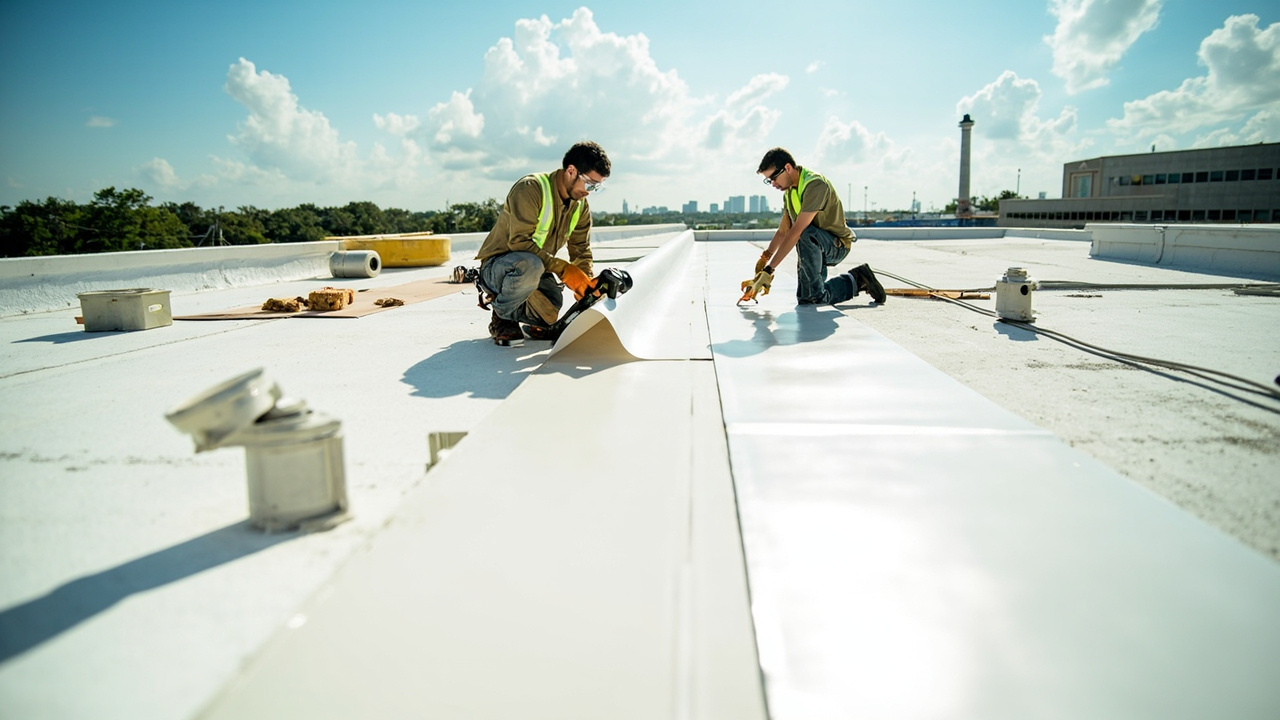
PVC membrane installation delivers waterproofing through heat-welded seams that create monolithic barriers. Unlike mechanically fastened systems with thousands of penetration points, hot-air welding fuses membrane sheets at the molecular level. This creates seams stronger than the base material, eliminating the primary failure point in flat roofing systems.

Your Tampa facility requires a PVC roofing system installation because the Gulf Coast climate destroys everything else. The question is not whether to install PVC, but whether your contractor understands the substrate preparation, drainage engineering, and welding protocols that separate 15-year failures from 30-year performance.

Why Tampa's Climate Demands Purpose-Built PVC Roofing Systems
How Commercial-Grade PVC Installation Differs from Residential Roofing

How Commercial-Grade PVC Installation Differs from Residential Roofing

PVC flat roof installation for commercial buildings requires engineering that residential contractors never encounter. Your project starts with structural load analysis, not material selection. We calculate dead loads, live loads, and wind uplift forces specific to your building height and Tampa's 140 mph wind zone requirements.

Substrate preparation determines system longevity. We document deck conditions through core sampling and moisture surveys. Concrete decks require primer application and insulation attachment that meets FM Global wind ratings. Metal decks need base sheet installation over structural ribs to create continuous bearing surfaces for membrane welding.

Insulation selection affects energy costs and system performance. We specify polyisocyanurate boards based on your R-value requirements and roof assembly compatibility. Tapered insulation systems eliminate ponding water by creating positive drainage to scuppers and drains. This matters in Tampa, where standing water breeds algae and accelerates UV degradation.

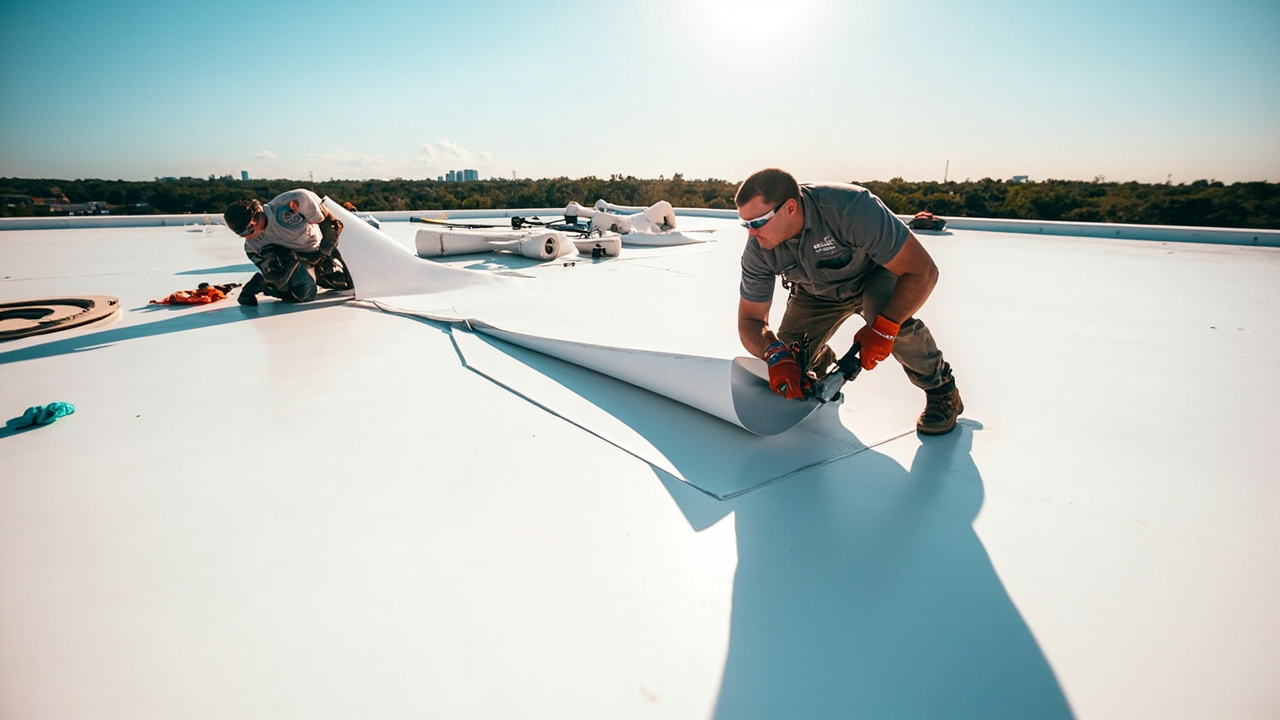
Membrane installation follows strict protocols. Our crews maintain ambient temperatures above 40 degrees during application. We verify substrate dryness through moisture meter readings before rolling out PVC sheets. Field seams receive double-welded joints, creating primary and secondary water barriers.

Detail work separates functional roofs from liability nightmares. We fabricate custom flashings for penetrations, parapet walls, and mechanical curbs. Each termination point receives mechanical attachment plus sealant application. Drain assemblies integrate clamping rings that compress membrane into watertight seals without puncturing the waterproofing layer.

Quality control happens through destructive testing. We perform seam peel tests every 10,000 square feet, physically tearing samples to verify weld strength exceeds membrane tensile strength. Failed tests trigger re-welding of entire sections until we achieve specification compliance.

What Happens During Your Commercial PVC Roof Installation

PVC Roof Installation in Tampa – Minimize Downtime with Industrial-Grade Commercial Roofing Solutions
01

Pre-Installation Facility Assessment

We conduct after-hours site surveys to map electrical systems, HVAC units, and production equipment. Our team photographs existing conditions, identifies code violations in current roofing, and develops phased installation schedules that maintain your operational requirements. You receive detailed staging plans showing material delivery zones, equipment placement, and daily work boundaries before we mobilize crews.
02

Coordinated Material Delivery

PVC membrane arrives in 10-foot wide rolls requiring crane placement onto your roof deck. We schedule deliveries during your low-traffic hours and coordinate with your facility manager on loading dock access. Insulation boards, fasteners, and welding equipment stage in designated areas that keep your parking and shipping operations unaffected. Material sequencing matches our installation phases to minimize roof deck exposure.
03

System Testing and Turnover

Final inspection includes flood testing around all penetrations and low-voltage electronic leak detection across the entire membrane. We provide you with seam weld documentation, insulation R-value certifications, and wind uplift test results. Your facility receives as-built drawings showing membrane layout, insulation thickness variations, and emergency repair procedures. We train your maintenance staff on inspection protocols and basic PVC patching techniques.

Why Tampa Facility Managers Choose Experienced Commercial PVC Contractors

Your roofing contractor needs specific capabilities that residential roofers do not possess. Commercial PVC roofing installation requires bonding capacity for projects exceeding $500,000, general liability coverage of $2 million minimum, and workers compensation insurance for crews working on occupied buildings.

We maintain manufacturer certifications from the three major PVC suppliers: GAF, Firestone, and Carlisle. These certifications require annual training on membrane chemistry, welding techniques, and system design. Certified contractors access technical support for complex details and can offer manufacturer-backed warranties that transfer to building buyers.

Tampa's building code compliance demands understanding of Chapter 15, Florida Building Code for roofing assemblies in High Velocity Hurricane Zones. Your PVC roofing system installation must meet TAS 100 and TAS 125 testing protocols for wind-driven rain and cyclic pressure loading. We submit engineered drawings stamped by Florida-licensed engineers and coordinate inspections with city building departments.

Our project management prevents the operational disruptions that cost you revenue. We sequence tear-off and installation to maintain weathertight conditions overnight. Crews arrive before your first shift and demobilize before evening operations. We isolate work zones with temporary barriers that contain dust and debris away from production areas.

Local expertise matters when problems emerge mid-project. We stock emergency materials at our Tampa facility, not at distant warehouses requiring two-day shipping. Our crews know which suppliers carry compatible fasteners when we encounter unexpected deck conditions. We have established relationships with structural engineers who can provide same-day assessments if we discover compromised roof framing.

Crestline Roofing Tampa has installed over 2 million square feet of commercial PVC membrane across the greater Tampa metro. We understand the difference between installing roofing and managing commercial construction projects.

What Your Commercial PVC Roof Installation Includes

Project Timeline and Phasing

Installation duration depends on roof area, existing conditions, and weather windows. A 20,000 square foot warehouse typically requires 10-12 working days from tear-off through final inspection. We develop critical path schedules showing daily progress milestones and weather contingency plans. You receive weekly updates on completion percentages and any field conditions requiring scope adjustments. Our contracts include liquidated damages clauses that compensate you for delays exceeding agreed timelines, ensuring we maintain schedule commitments even when complications arise.

Engineering and Code Compliance

Every commercial PVC installation begins with structural analysis and system design. Our engineers calculate wind uplift forces specific to your building geometry and specify fastener patterns that meet Florida Building Code requirements. You receive stamped drawings showing insulation layouts, drainage slopes, and attachment schedules. We coordinate permit applications, building department plan reviews, and final inspections. Our documentation package includes material certifications, weld test reports, and compliance letters that satisfy your insurance underwriters and protect you during property transactions.

Installation Quality Standards

Your completed roof delivers measurable performance specifications, not contractor promises. We guarantee seam weld strength through destructive peel testing at manufacturer-specified intervals. Infrared thermography scans verify insulation continuity and identify thermal bridges before membrane installation. Electronic leak detection testing covers 100% of the installed membrane, not random spot checks. Final drainage verification confirms water flows to designed drainage points within 48 hours of rainfall. You receive test documentation showing your roof meets both manufacturer specifications and Florida Building Code requirements.

Maintenance Programs and Warranties

Commercial roofs require ongoing maintenance to achieve projected service life. We offer annual inspection programs that document membrane conditions, clear drains, and address minor repairs before they become system failures. Manufacturer warranties range from 15 to 30 years depending on membrane thickness and system design, covering material defects and premature failures. Our labor warranties guarantee installation workmanship for periods matching your material coverage. Transferable warranties maintain property value when you sell or lease your facility, providing documented proof of roof integrity to buyers and tenants.

Frequently Asked Questions

You Have Questions,
We Have Answers

How is a PVC roof installed? +

PVC roof installation starts with a thorough substrate inspection to ensure structural integrity. Contractors mechanically fasten or fully adhere insulation boards to the deck. PVC membrane sheets are rolled out, then heat-welded together using hot air welding equipment to create watertight seams. Corners, penetrations, and roof edges receive custom-fabricated flashings. In Tampa, proper slope design is critical to handle heavy rain events and prevent ponding water. The roof perimeter is secured with termination bars or fasteners. Final inspections verify seam integrity and compliance with Florida Building Code wind uplift requirements for hurricane zones.

What are the disadvantages of PVC roofing? +

PVC roofing has higher upfront material costs compared to TPO or EPDM. The membrane can experience dimensional instability in extreme heat, leading to seam stress if not properly installed. PVC is less resistant to petroleum-based chemicals and certain solvents, which matters for facilities with rooftop HVAC equipment prone to oil leaks. In Tampa's intense UV environment, lower-grade PVC formulations may chalk or discolor faster. Installation requires specialized hot air welding equipment and trained technicians, limiting contractor options. Poor seam welding creates failure points that compromise the entire system.

How much does it cost to install a PVC roof? +

We do not provide specific cost figures because every commercial roof project varies based on building size, structural condition, insulation requirements, and code compliance needs. Cost factors include membrane thickness, insulation R-value, existing roof removal, parapet repairs, and penetration flashing complexity. Tampa projects must account for hurricane wind uplift ratings and Florida Building Code requirements, which affect fastening patterns and material specifications. Roof access difficulty and business hours restrictions also impact labor costs. Request a detailed site assessment to receive an accurate project-specific estimate rather than relying on generic square footage pricing.

How long will a PVC roof last? +

A properly installed PVC roof typically lasts 20 to 30 years in commercial applications. Tampa's climate accelerates wear due to intense UV exposure, thermal cycling, and salt air in coastal areas. Roof longevity depends on membrane thickness, seam quality, regular maintenance, and ponding water elimination. Facilities that implement biannual inspections and clear drains promptly see extended service life. Foot traffic from HVAC maintenance crews can shorten lifespan if walkway pads are not installed. Material quality varies between manufacturers, so specifying high-grade PVC formulations designed for Florida's subtropical environment improves durability.

How much should a 2000 sq ft roof cost? +

We do not provide cost estimates based solely on square footage. A 2000 square foot commercial roof cost depends on existing conditions, required tear-off, structural repairs, insulation upgrades, code compliance needs, and access challenges. Tampa projects require Florida Building Code wind uplift compliance and proper flashing for frequent rain events. Flat roofs need tapered insulation systems to eliminate ponding water. Roof penetrations, parapet conditions, and HVAC equipment placement all affect pricing. Business downtime considerations and phased installation requirements also impact total project cost. Schedule a professional roof assessment for accurate pricing.

Do you need to rough up PVC before gluing? +

Yes. PVC membrane surfaces must be abraded before applying adhesive to create mechanical bonding. Smooth PVC does not provide adequate surface profile for adhesive penetration. Contractors use abrasive pads or wire brushes to rough up both mating surfaces, then clean away dust and oils with approved cleaners. This preparation is critical for patches, detail work, and areas where heat welding is impractical. Skipping this step results in weak bonds that fail under stress. In Tampa's high wind environment, proper surface preparation prevents blow-offs during tropical storms and hurricanes.

What is the life expectancy of a PVC ceiling? +

PVC ceiling panels used in interior applications typically last 15 to 25 years, though this differs significantly from roofing membrane. Indoor PVC avoids UV degradation and weather exposure that affects roofing systems. Moisture resistance makes PVC ceilings suitable for Tampa's humid climate in commercial kitchens, restrooms, and pool enclosures. Lifespan depends on cleaning practices, ventilation quality, and exposure to heat sources. Commercial facilities see longer service life than residential applications due to controlled environments. PVC ceilings resist mold and mildew better than traditional materials in high-humidity spaces.

What is better, PVC or polycarbonate roof? +

PVC roofing outperforms polycarbonate for commercial flat roof applications due to superior weatherproofing and heat-welded seam integrity. Polycarbonate is primarily used for translucent skylight panels, not waterproofing membranes. PVC provides Class A fire rating, chemical resistance, and proven durability in Tampa's subtropical climate. Polycarbonate expands and contracts significantly with temperature changes, creating fastener stress. For commercial roof replacement, PVC membrane offers better wind uplift resistance and Florida Building Code compliance. Polycarbonate serves specific daylighting needs but cannot replace a primary roofing system. The materials address different building requirements.

Does PVC get brittle with age? +

Low-quality PVC formulations can become brittle over time due to plasticizer loss from UV exposure and heat cycling. Modern commercial-grade PVC roofing membranes use advanced stabilizers and plasticizer packages engineered to resist degradation. In Tampa's intense sun and high temperatures, membrane quality matters significantly. Premium PVC products maintain flexibility for decades when properly installed with adequate slope to prevent ponding water. Regular inspections identify early signs of membrane hardening. Facilities that defer maintenance and allow standing water accelerate plasticizer leaching. Specifying manufacturer-certified products designed for Florida conditions prevents premature embrittlement.

Which is better EPDM or PVC roofing? +

PVC offers superior seam strength through heat welding, creating permanent molecular bonds that surpass EPDM's adhesive or tape seams. PVC resists ponding water better and reflects more UV radiation, reducing cooling loads in Tampa's hot climate. EPDM costs less upfront but requires more frequent inspections due to seam vulnerability. PVC handles foot traffic better for rooftop HVAC maintenance. EPDM performs well in applications with minimal penetrations and low traffic. For Tampa commercial buildings with regular equipment servicing and hurricane exposure, PVC provides better long-term value despite higher initial investment.

How Tampa Bay's Salt Air and Hurricane Exposure Affect PVC Membrane Performance

Facilities within five miles of Tampa Bay face accelerated corrosion from salt-laden air that attacks metal components in roofing assemblies. PVC membrane installation eliminates this vulnerability because polyvinyl chloride remains chemically inert when exposed to sodium chloride. The real challenge involves fastener selection and edge details where metal components anchor the membrane. We specify stainless steel fasteners and aluminum coping that resist pitting corrosion. Parapet wall terminations receive double-sealed flashings that prevent salt infiltration behind membranes. This matters because a single corroded fastener can compromise 100 square feet of roofing through water intrusion and wind uplift failure.

Tampa's position in the High Velocity Hurricane Zone requires roofing contractors who understand FM Global testing protocols and wind uplift calculations. Your insurance carrier evaluates roof systems based on loss history and engineering certifications, not contractor marketing claims. We provide documentation showing our PVC roofing system installations meet I-90 wind ratings for buildings in your specific location. This certification affects your property insurance premiums and claim eligibility after storm events. Local building officials recognize our permit history and code compliance record, expediting inspections that keep your project on schedule.
Roofing Services in The Tampa Area

We are proud to serve the entire area, providing exceptional roofing services to homeowners and businesses. While we travel directly to your location, you can view our main office on the map to get a sense of our central hub. Our local presence ensures we can respond quickly to your needs and provide the personalized service you deserve. We're always nearby, ready to help with your next roofing project.

Address:
Crestline Roofing Tampa, 2144 W Main St, Tampa, FL, 33607

Additional Services We Offer

Our news updates

Latest Articles & News from The Blogs

What to Do When Your Roofing Contractor Disappears Before the Job is Done Your roofer vanished mid-project and now your…

What to Do When Your Roofing Contractor Disappears Before the Job is Done

What to Do When Your Roofing Contractor Disappears Before the Job is Done Your roofer vanished mid-project and now your…

How the Florida Heat Impacts the Installation Process of Your Pebble Creek Roof

Florida’s summer heat transforms every roofing project in Pebble Creek into a carefully choreographed operation. Asphalt shingles soften at temperatures…

Why Your Gutters Are Overwhelming Your Foundation Even When They Aren't Clogged

Why Your Gutters Are Overwhelming Your Foundation Even When They Aren't Clogged Heavy rain pounds Tampa rooftops during summer afternoons,…

Contact Us

Your facility cannot afford roofing failures that halt operations and damage inventory. Call (656) 245-0955 now to schedule a structural assessment and receive engineered specifications for your commercial PVC roof installation. We provide detailed proposals within 48 hours of site evaluation.