
Why Your Gutters Are Overwhelming Your Foundation Even When They Aren’t Clogged
Heavy rain pounds Tampa rooftops during summer afternoons, sending torrents of water racing through your gutter system. But the real threat to your foundation isn’t debris blocking the flow—it’s undersized gutters, improper pitch, and inadequate downspout capacity that overwhelm your drainage system during Florida’s intense downpours. Florida Building Code.
Many Tampa homeowners discover foundation cracks, basement leaks, and soil erosion only after years of roof water mismanagement. The good news? You can fix these issues before they cause thousands in structural damage. Understanding how your roof drainage system works—and where it fails—is the first step to protecting your home.
Florida’s subtropical climate creates unique drainage challenges. Tampa receives approximately 51 inches of rainfall annually, with most falling between June and September. When your gutters can’t handle the volume, water spills over the sides and saturates the soil around your foundation. This constant moisture exposure leads to hydrostatic pressure that pushes against basement walls and creates foundation settlement.
The problem compounds in older Tampa neighborhoods where homes were built before modern drainage standards. Many properties in areas like Seminole Heights and South Tampa feature undersized gutter systems that worked fine for decades but now fail under today’s heavier rainfall patterns and more intense storms.
Common Causes of Roof Drainage Failure in Central Florida
Most drainage failures stem from three root causes: inadequate capacity, poor pitch, and structural defects. Understanding these issues helps you identify problems before they escalate.
Undersized gutters represent the most common issue. Standard 5-inch K-style gutters work for light rainfall but fail during Tampa’s tropical downpours. When rainfall exceeds 1.5 inches per hour—common during summer thunderstorms—water backs up and overflows. This happens even when gutters appear clean and debris-free.
Poor roof pitch creates another failure point. Flat roofs and low-slope designs require specialized drainage systems. Without proper slope toward drains, water ponds and creates standing water that exceeds the 48-hour evaporation rule mandated by Florida Building Code. This ponding adds weight and accelerates deterioration.
Structural defects in the drainage path cause failures too. Cracked scuppers, separated downspout joints, and corroded conductor heads leak water where it shouldn’t go. These issues often hide behind parapet walls or within wall cavities until significant damage occurs. EPA stormwater management guidelines.
Debris buildup isn’t always the culprit. While oak leaves and pine needles common in Tampa neighborhoods do cause clogs, many drainage failures occur in clean systems. The underlying design simply can’t handle the water volume.
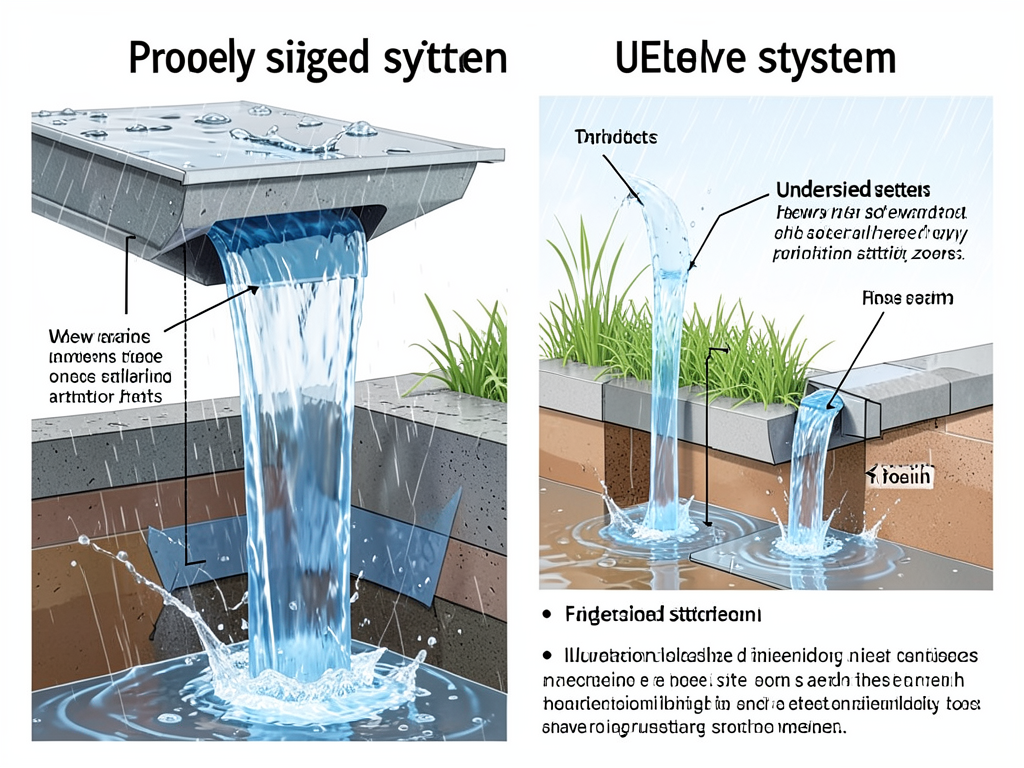
Image description: Technical diagram showing water flow through properly sized gutter system versus undersized system during heavy rainfall. Illustrates overflow points and foundation saturation zones.
Identifying the Warning Signs
Foundation damage develops gradually, giving you time to intervene if you know what to look for. Several warning signs indicate your drainage system needs immediate attention.
Ponding water on flat roofs signals immediate trouble. If water remains visible 48 hours after rainfall stops, your roof violates Florida Building Code requirements. This standing water indicates improper slope, blocked drains, or inadequate drainage capacity.
Soil erosion patterns around your foundation reveal drainage problems. Look for washed-out mulch beds, exposed roots, and soil recession near downspouts. These signs show water isn’t being directed away from your home properly.
Interior warning signs often appear before exterior damage becomes visible. Water stains on interior walls, especially near floor level, indicate foundation moisture penetration. Musty odors in basements or crawl spaces suggest chronic moisture problems.
Exterior wall damage provides another clue. Efflorescence—white mineral deposits on brick or concrete—indicates water moving through foundation walls. This salt migration occurs when water carries dissolved minerals from soil through masonry.
Foundation cracks develop from differential settling caused by uneven moisture content. Look for stair-step cracks in brick veneer, horizontal cracks in foundation walls, and gaps where walls meet floors. These structural issues require immediate professional assessment.
Flat Roof vs. Sloped Roof Drainage Solutions
Different roof types require distinct drainage approaches. Understanding these differences helps you choose the right solution for your home.
Flat roofs need internal drainage systems. Scuppers—openings in parapet walls—allow water to exit the roof surface. These require proper sizing based on roof area and rainfall intensity. Undersized scuppers overflow during heavy storms, sending water where it shouldn’t go.
Internal roof drains provide another flat roof solution. These connect to building drain lines and require secondary drainage systems per Florida Building Code. When primary drains clog, secondary systems prevent catastrophic water buildup.
Tapered insulation systems create slope on flat roofs. These tapered panels direct water toward drains and scuppers. Without proper taper, even good drains can’t remove water effectively. The minimum slope requirement is 1/4 inch per foot toward drains.
Sloped roofs use gutters and downspouts. But not all gutters work equally well. Oversized 6-inch or 7-inch gutters handle Tampa’s rainfall better than standard 5-inch versions. The extra capacity prevents overflow during tropical downpours.
Conductor heads—boxes that collect water from multiple roof areas—prevent gutter overload. These distribute water flow and prevent concentrated streams from overwhelming single gutter sections.
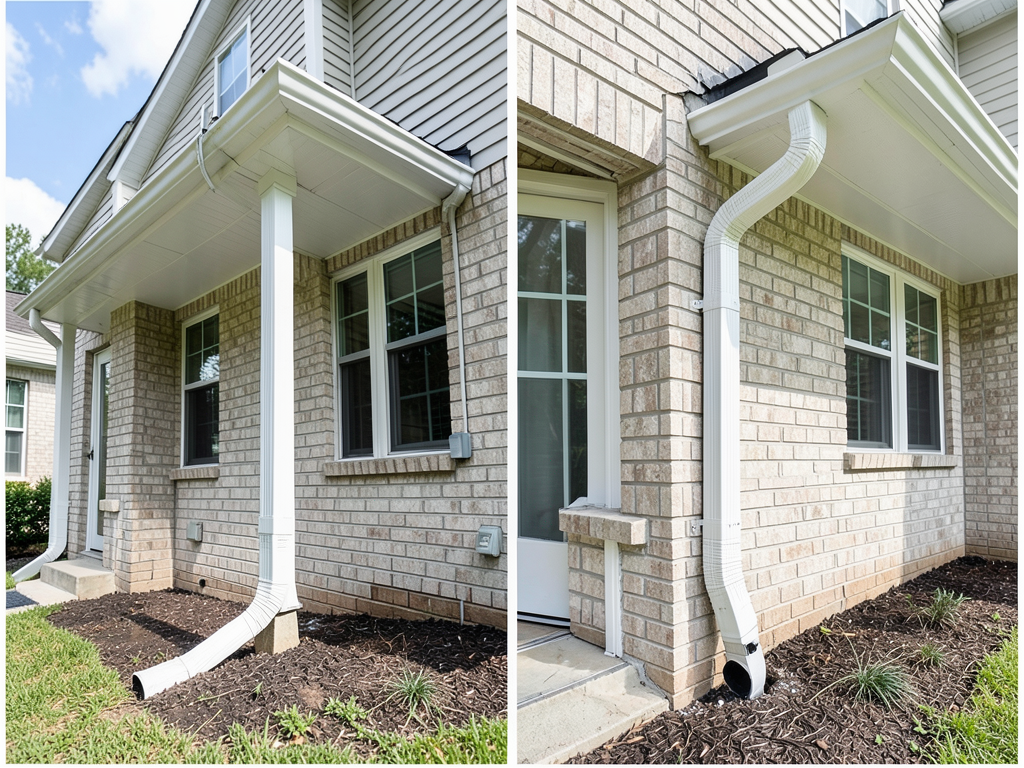
Image description: Before and after photos showing installation of oversized gutters and downspout extensions on a Tampa home. Demonstrates proper water diversion away from foundation.
The Impact of Tampa’s Climate on Your Drainage System
Tampa’s subtropical climate creates unique challenges for roof drainage systems. Understanding these factors helps you design systems that withstand local conditions.
High humidity accelerates algae and mold growth in gutters. This biological growth creates a slimy surface that reduces water flow capacity. Even clean-looking gutters may have internal buildup that restricts flow.
Intense UV exposure degrades gutter materials. Florida’s strong sunlight breaks down plastic components and causes paint to chalk and peel on metal systems. This deterioration reduces system lifespan and creates leak points.
Hurricane-force winds test drainage system security. Downspouts must be properly anchored to prevent detachment during storms. Loose components become projectiles and create immediate drainage failures.
Thermal expansion and contraction stress gutter joints. Tampa’s temperature swings cause metal gutters to expand and contract, loosening fasteners over time. This movement creates gaps that leak during rainfall.
Salt air corrosion affects coastal properties. Homes near Tampa Bay or in beach communities experience accelerated metal deterioration. Galvanized steel gutters may fail in 10-15 years instead of the expected 20-25 years.
Professional Inspection and Maintenance Schedule
Regular inspections prevent drainage failures. A professional assessment identifies problems before they cause damage.
Pre-hurricane season inspections should occur in May or June. This timing allows repairs before storm season begins. Technicians check all components for security, clean debris from critical areas, and verify proper water flow.
Post-hurricane season inspections in November assess storm damage. High winds and flying debris often damage gutters and downspouts. Early detection prevents small issues from becoming major problems.
Annual maintenance includes gutter cleaning, downspout testing, and seal inspection. Professional cleaning removes buildup that homeowners miss. Technicians also check for proper pitch and secure all mounting hardware.
Foundation monitoring tracks drainage system effectiveness. Look for new cracks, moisture patterns, and settling after major storms. These observations help you adjust maintenance schedules based on actual performance.
Insurance considerations affect inspection timing. Many policies require documentation of regular maintenance. Keep records of professional inspections to support claims if damage occurs. Navigating Roof Insurance Claims After a Storm in Tampa.
Image description: Technician performing moisture meter test on foundation wall to detect water intrusion from roof drainage failures. Shows diagnostic process and equipment.
Cost-Effective Drainage Improvements
You don’t need to replace your entire drainage system to solve most problems. Several cost-effective improvements provide significant benefits.
Downspout extensions redirect water away from foundations. These simple additions prevent soil saturation near your home. Extensions should discharge water at least 6 feet from foundation walls.
Gutter guards reduce maintenance frequency. While they don’t eliminate cleaning needs, quality guards prevent large debris from entering the system. This reduces the risk of sudden overflow during storms.
Sealing gutter joints prevents leaks. Many gutter failures occur at connection points. Professional sealing with appropriate sealants prevents water from escaping the system.
Adding downspouts increases capacity. If your current downspouts can’t handle water volume, adding more distribution points solves the problem. This improvement often costs less than complete system replacement. Affordable Roof Replacement Solutions for Homeowners in Riverview.
Correcting gutter pitch improves flow. Many gutter systems develop sags over time. Realigning gutters to maintain proper slope toward downspouts improves performance without replacing components.
When to Call a Professional
Some drainage problems require professional expertise. Knowing when to call for help prevents costly mistakes.
Foundation cracks wider than 1/8 inch indicate structural issues. These require engineering assessment and professional repair. DIY fixes won’t address underlying causes.
Standing water on flat roofs for more than 48 hours violates building codes. This condition requires professional assessment to identify slope problems, drain blockages, or capacity issues.
Water intrusion in living spaces demands immediate attention. Interior leaks suggest system failures that could cause mold growth and structural damage. Professional diagnosis identifies the source and solution.
Insurance claim preparation benefits from professional documentation. When filing claims for water damage, detailed inspection reports support your case and ensure proper compensation.
System design for new construction or major renovations requires expertise. Professional designers ensure your drainage system meets current codes and handles local rainfall patterns. New Roof Construction.
Protecting Your Investment
Your home represents your largest investment. Protecting it from water damage through proper drainage system maintenance makes financial sense.
Foundation repairs cost thousands of dollars. Preventing water damage through proper drainage costs far less than repairing structural issues after they develop.
Property values suffer from drainage problems. Visible foundation issues, water stains, and moisture damage reduce resale value. Buyers often demand price reductions or repairs before purchasing.
Insurance premiums increase with water damage history. Homes with foundation issues or water intrusion problems often face higher rates or coverage limitations.
Peace of mind comes from knowing your home is protected. A properly functioning drainage system lets you sleep through storms without worrying about water damage.
Regular maintenance extends system life. Like any mechanical system, your drainage components last longer with proper care. This delays expensive replacement costs.
Frequently Asked Questions
How often should I clean my gutters in Tampa?
Tampa’s heavy rainfall and abundant foliage require cleaning at least twice yearly—typically in late spring and early fall. Homes near oak or pine trees may need quarterly cleaning to prevent debris buildup that causes overflow during storms.
What size gutters do I need for my Tampa home?
Most Tampa homes need 6-inch K-style gutters rather than standard 5-inch versions. Homes with large roof areas or those in areas with intense rainfall may require 7-inch gutters. A professional assessment considers your roof size, pitch, and local rainfall patterns.
Can I install drainage improvements myself?
Simple improvements like downspout extensions are DIY-friendly. However, gutter pitch correction, scupper installation, and internal drain work require professional expertise. Improper installation can worsen drainage problems and create code violations.
How much does professional gutter cleaning cost in Tampa?
Professional gutter cleaning in Tampa typically costs $150-300 for a single-story home, depending on size and accessibility. Multi-story homes or those with complex rooflines may cost $300-500. This investment prevents costly water damage repairs.
What building codes apply to roof drainage in Florida?
Florida Building Code requires roof drainage systems to handle 1.5 inches of rainfall per hour. Flat roofs must drain completely within 48 hours after rainfall stops. Secondary drainage systems are mandatory for internal roof drains. Local jurisdictions may have additional requirements.
Call (656) 245-0955 today to schedule your inspection. Don’t wait for the next storm to reveal your drainage problems. Our Tampa roofing experts will assess your system and recommend cost-effective solutions to protect your foundation. Choosing the Best Roofing Contractor for Your Westchase Home.
Pick up the phone and call (656) 245-0955 before the next storm hits. Foundation damage from poor drainage costs thousands to repair, but prevention starts with a simple phone call. Our team serves Tampa, St. Petersburg, and surrounding communities with emergency response available 24/7.
{
“@context”: “https://schema.org”,
“@type”: “BlogPosting”,
“headline”: “Why Your Gutters Are Overwhelming Your Foundation Even When They Aren’t Clogged”,
“description”: “Learn why Tampa homes suffer foundation damage from roof drainage failures. Discover flat roof ponding solutions, gutter sizing for tropical storms, and hurricane-ready maintenance.”,
“wordCount”: 1999,
“datePublished”: “2026-06-11T06:43:00.000Z”,
“dateModified”: “2026-06-11T06:43:00.000Z”,
“inLanguage”: “en-US”,
“mainEntityOfPage”: {
“@type”: “WebPage”,
“@id”: “https://crestlineroofingtampa.com”
},
“publisher”: {
“@type”: “LocalBusiness”,
“name”: “Crestline Roofing Tampa”,
“url”: “https://crestlineroofingtampa.com”
},
“author”: {
“@type”: “Organization”,
“name”: “Crestline Roofing Tampa”,
“url”: “https://crestlineroofingtampa.com”
},
“image”: {
“@type”: “ImageObject”,
“url”: “https://crestlineroofingtampa.com/wp-content/uploads/2026/03/why-your-gutters-are-overwhelming-your-foundation-1.png”
}
}
{
“@context”: “https://schema.org”,
“@type”: “RoofingContractor”,
“name”: “Crestline Roofing Tampa”,
“url”: “https://crestlineroofingtampa.com”,
“address”: {
“@type”: “PostalAddress”,
“addressLocality”: “Tampa”
},
“areaServed”: {
“@type”: “City”,
“name”: “Tampa”
}
}
{
“@context”: “https://schema.org”,
“@type”: “FAQPage”,
“mainEntity”: [
{
“@type”: “Question”,
“name”: “How often should I clean my gutters in Tampa?”,
“acceptedAnswer”: {
“@type”: “Answer”,
“text”: “Tampa’s heavy rainfall and abundant foliage require cleaning at least twice yearly—typically in late spring and early fall. Homes near oak or pine trees may need quarterly cleaning to prevent debris buildup that causes overflow during storms.”
}
},
{
“@type”: “Question”,
“name”: “What size gutters do I need for my Tampa home?”,
“acceptedAnswer”: {
“@type”: “Answer”,
“text”: “Most Tampa homes need 6-inch K-style gutters rather than standard 5-inch versions. Homes with large roof areas or those in areas with intense rainfall may require 7-inch gutters. A professional assessment considers your roof size, pitch, and local rainfall patterns.”
}
},
{
“@type”: “Question”,
“name”: “Can I install drainage improvements myself?”,
“acceptedAnswer”: {
“@type”: “Answer”,
“text”: “Simple improvements like downspout extensions are DIY-friendly. However, gutter pitch correction, scupper installation, and internal drain work require professional expertise. Improper installation can worsen drainage problems and create code violations.”
}
},
{
“@type”: “Question”,
“name”: “How much does professional gutter cleaning cost in Tampa?”,
“acceptedAnswer”: {
“@type”: “Answer”,
“text”: “Professional gutter cleaning in Tampa typically costs $150-300 for a single-story home, depending on size and accessibility. Multi-story homes or those with complex rooflines may cost $300-500. This investment prevents costly water damage repairs.”
}
},
{
“@type”: “Question”,
“name”: “What building codes apply to roof drainage in Florida?”,
“acceptedAnswer”: {
“@type”: “Answer”,
“text”: “Florida Building Code requires roof drainage systems to handle 1.5 inches of rainfall per hour. Flat roofs must drain completely within 48 hours after rainfall stops. Secondary drainage systems are mandatory for internal roof drains. Local jurisdictions may have additional requirements.”
}
}
]
}
{
“@context”: “https://schema.org”,
“@type”: “BreadcrumbList”,
“itemListElement”: [
{
“@type”: “ListItem”,
“position”: 1,
“name”: “Home”,
“item”: “https://crestlineroofingtampa.com”
},
{
“@type”: “ListItem”,
“position”: 2,
“name”: “Blog”,
“item”: “https://crestlineroofingtampa.com/blog”
},
{
“@type”: “ListItem”,
“position”: 3,
“name”: “Why Your Gutters Are Overwhelming Your Foundation Even When They Aren’t Clogged”
}
]
}
{
“@context”: “https://schema.org”,
“@type”: “Service”,
“serviceType”: “Roofing”,
“provider”: {
“@type”: “LocalBusiness”,
“name”: “Crestline Roofing Tampa”,
“url”: “https://crestlineroofingtampa.com”
},
“areaServed”: {
“@type”: “City”,
“name”: “Tampa”
},
“description”: “Learn why Tampa homes suffer foundation damage from roof drainage failures. Discover flat roof ponding solutions, gutter sizing for tropical storms, and hurricane-ready maintenance.”
}