
Why Ridge Vents Might Not be Enough for Large Multi-Level Homes in Lithia
Large multi-level homes in Lithia face unique ventilation challenges that ridge vents alone cannot solve. The combination of Florida’s intense heat, high humidity, and the architectural complexity of multi-story homes creates attic environments where temperature and moisture levels can reach dangerous extremes. When your upstairs bedrooms feel like saunas while downstairs remains comfortable, you’re experiencing the direct result of inadequate ventilation design for your home’s specific needs. Florida Building Code requirements.
The problem stems from several factors unique to Lithia’s geography and housing patterns. Many newer developments feature expansive two-story homes with vaulted ceilings, complex roof lines, and attic spaces that traditional ridge venting cannot adequately service. During Tampa’s summer months when temperatures regularly exceed 90 degrees with humidity above 80%, these ventilation gaps become critical failure points that affect comfort, energy costs, and even structural integrity.
Understanding why ridge vents fall short requires examining how attic ventilation works in Florida’s climate. The basic principle involves creating continuous airflow: cool air enters through soffit vents at the eaves while hot air exits through ridge vents at the peak. However, this simple equation breaks down in large multi-level homes where ceiling heights vary, attic spaces are compartmentalized, and the volume of air that needs to be moved far exceeds what ridge vents can handle. Florida Solar Energy Center research.
How Florida’s Climate Changes Ventilation Requirements
Florida’s climate creates ventilation demands that northern states never encounter. The state’s building code recognizes this through specific requirements in the Florida Building Code (FBC) Chapter 15, which mandates that residential attic ventilation must provide at least one square foot of net free ventilating area (NFVA) for every 150 square feet of attic floor space. However, this baseline requirement assumes uniform, single-story construction. New Roof Construction.
In Lithia’s multi-level homes, the calculation becomes more complex. Heat rises naturally, creating temperature stratification where upper levels can be 10-15 degrees warmer than lower levels. This effect is amplified in homes with open stairwells or vaulted ceilings that allow heat to accumulate in upper stories. The result is that even when ridge vents meet code minimums, they cannot effectively remove the concentrated heat load in upper-level attic spaces.
Humidity presents an even greater challenge. Tampa’s coastal location means summer afternoons often see dew points in the mid-70s, creating conditions where moisture continuously migrates from humid outdoor air into cooler attic spaces. When this moisture-laden air cannot escape quickly enough, condensation forms on roof decking, insulation becomes saturated, and the perfect environment for mold growth develops. Ridge vents, designed primarily for heat removal, cannot address this moisture problem effectively.
Common Ventilation Failures in Lithia Multi-Level Homes
During our inspections of Lithia homes, we consistently find the same ventilation failures. Many homes built in the early 2000s through 2015 were constructed with minimal ventilation – often just a few static roof vents and basic ridge venting that met code at the time but cannot handle today’s energy demands or climate intensity.
Another common issue involves blocked or restricted airflow paths. In multi-level homes, interior walls, knee walls, and vaulted ceiling structures create natural barriers that prevent air from moving freely between attic sections. We frequently discover that while ridge vents appear to be functioning, the air they’re trying to move is trapped in dead zones created by the home’s architecture.. Read more about Choosing Between Off-Ridge Vents and Powered Attic Fans for Better Airflow in Lutz.
Improper vent installation also plagues many Lithia homes. Ridge vents must be installed with specific spacing and baffling to create the pressure differential needed for proper airflow. When installed incorrectly – a common issue in homes built during the construction boom – they become little more than cosmetic features that provide minimal actual ventilation.
Beyond Ridge Vents: Comprehensive Ventilation Solutions
Effective ventilation for large multi-level homes requires a multi-faceted approach that goes beyond ridge vents. The most successful systems combine passive and active ventilation components specifically engineered for the home’s unique characteristics.
Solar-powered attic fans represent one of the most effective additions to ridge vent systems. These units can move 1,000 to 1,500 cubic feet of air per minute – volumes that static ridge vents cannot match. In Lithia’s sunny climate, solar fans operate at peak efficiency during the hottest parts of the day when ventilation is most needed. They’re particularly effective in upper-level attic spaces where heat accumulates most severely.
Off-ridge vents provide targeted ventilation for areas where ridge vents cannot reach. These vents install along the roof slope rather than at the peak, allowing them to service compartmentalized attic spaces and areas beneath vaulted ceilings. When properly distributed, off-ridge vents eliminate the dead zones that plague many multi-level homes.
Continuous soffit venting often gets overlooked but proves critical in multi-level applications. Many Lithia homes have individual soffit vents spaced too far apart to create the intake airflow needed to support ridge vents. Continuous venting ensures that cool air enters uniformly along the entire eave line, creating the pressure differential that drives effective exhaust through ridge and other vents.
The Science of Proper Ventilation Balance
Successful ventilation systems depend on maintaining proper balance between intake and exhaust. The general rule calls for equal areas of intake and exhaust venting, but in multi-level homes, this balance becomes more nuanced. Upper-level attic spaces often require greater exhaust capacity because heat naturally rises to these areas.
Calculating the right balance involves measuring attic floor area, roof pitch, and the specific heat load created by the home’s design. A 3,000-square-foot ranch home might need 20 square feet of total venting, while a 3,000-square-foot two-story home with vaulted ceilings could require 30-35 square feet to achieve the same temperature reduction. This difference highlights why ridge vents alone often prove insufficient.
Airflow dynamics also matter. Ventilation works through pressure differentials – cool air entering at the eaves creates positive pressure that pushes hot air out through ridge vents. When this system is compromised by architectural barriers or insufficient intake, the result is stagnant air pockets where temperatures soar and moisture accumulates.
Moisture Control: The Hidden Danger
While heat gets most of the attention, moisture control represents the more serious long-term threat to Lithia homes. Florida’s humidity means that even well-ventilated attics can develop moisture problems if the system cannot handle the continuous influx of humid air.
Moisture enters attics through several paths: air leaks around light fixtures and ceiling penetrations, humid outdoor air drawn in through soffit vents, and even vapor diffusion through building materials. Once inside, this moisture seeks cold surfaces – typically roof decking at night when temperatures drop. The resulting condensation creates conditions for wood rot, insulation degradation, and mold growth.
Active ventilation systems like solar fans help address this problem by increasing air exchange rates. Where passive systems might exchange attic air once per hour, active systems can achieve 3-5 air changes per hour, dramatically reducing the time moisture has to condense on surfaces. This increased turnover is particularly important in Lithia’s climate where outdoor humidity rarely drops below 60% even at night.
Energy Efficiency and Cost Implications
Inadequate ventilation directly impacts energy costs in ways many homeowners don’t realize. When attic temperatures exceed 140 degrees Fahrenheit – common in poorly ventilated multi-level homes – the heat radiates through ceiling insulation into living spaces. This forces air conditioning systems to work harder, particularly on upper levels where the temperature differential is greatest.
Studies by the Florida Solar Energy Center show that proper attic ventilation can reduce cooling costs by 10-15% in hot, humid climates. For a typical Lithia home with annual cooling costs of $2,500, this translates to $250-375 in annual savings. More importantly, reducing the heat load on HVAC systems extends equipment life and reduces maintenance costs.
The energy impact extends beyond direct cooling costs. Excessive attic heat can cause roofing materials to degrade prematurely – asphalt shingles in Florida’s climate typically last 15-20 years with proper ventilation but may fail in 10-12 years when attic temperatures remain chronically high. This represents a significant hidden cost that proper ventilation helps avoid. Choosing the Best Roofing Contractor for Your Westchase Home.
Building Code Compliance and Insurance Considerations
Florida’s building code continues to evolve as understanding of ventilation needs improves. The current FBC requires that ventilation systems be designed to provide uniform airflow throughout the attic space. This requirement directly challenges the adequacy of ridge vents alone in complex roof designs.
Insurance companies also scrutinize ventilation when assessing wind mitigation credits. Homes with properly designed ventilation systems that meet current standards may qualify for premium discounts of 5-15% on windstorm coverage. These discounts recognize that well-ventilated attics experience less wind-driven rain intrusion during storms and maintain better structural integrity under high wind loads. Navigating Roof Insurance Claims After a Storm in Tampa.
For Lithia homeowners, compliance with current standards often requires retrofitting older ventilation systems. While this represents an upfront investment, the combination of energy savings, extended roof life, and insurance discounts typically provides return on investment within 3-5 years.
Diagnostic Testing: Finding Your Ventilation Problems
Before investing in ventilation upgrades, proper diagnostic testing identifies specific problems in your home’s system. Professional ventilation assessment involves several key tests that reveal what’s actually happening in your attic space.
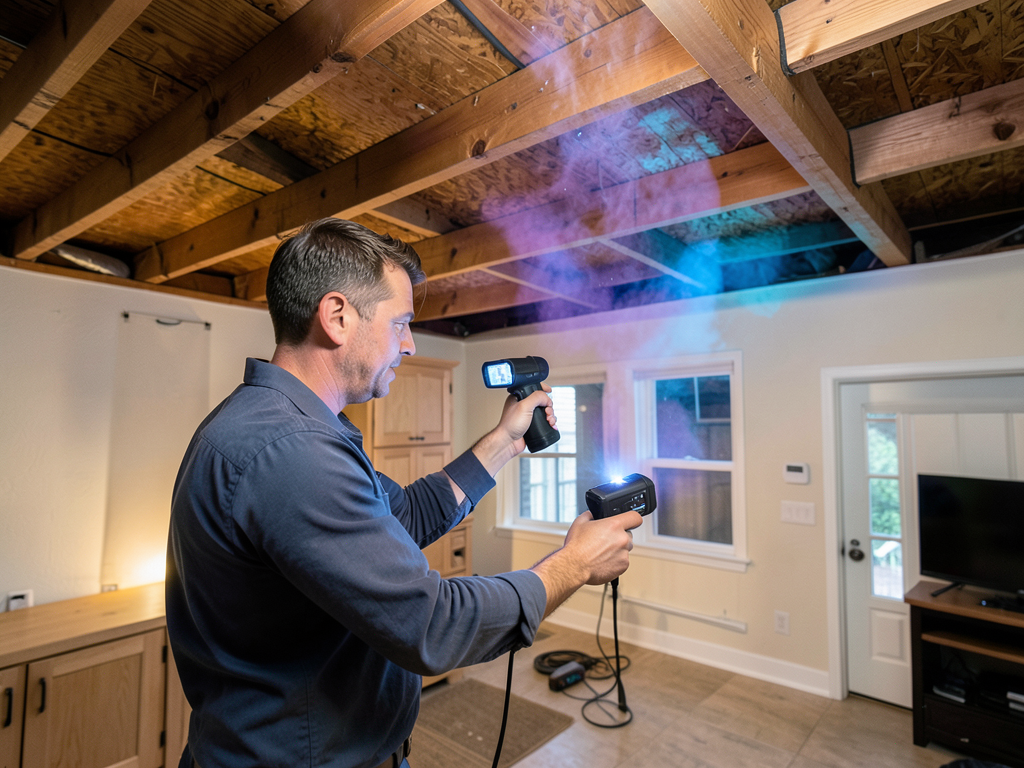
Temperature profiling uses infrared cameras and digital thermometers to map temperature variations throughout the attic. This diagnostic reveals hot spots where ventilation is inadequate and helps identify airflow patterns that may be blocked or restricted. In multi-level homes, temperature profiling often shows dramatic variations between upper and lower attic sections.
Blower door testing measures how much air leaks from the living space into the attic. Excessive leakage indicates opportunities for sealing that would reduce the moisture load on your ventilation system. This test is particularly important in older Lithia homes where construction methods allowed more air infiltration than modern standards permit.
Smoke testing visualizes actual airflow patterns in the attic. By introducing non-toxic smoke at various points, technicians can see exactly how air moves (or doesn’t move) through the space. This test often reveals surprising dead zones and circulation patterns that temperature readings alone cannot detect.
Maintenance Requirements for Ventilation Systems
Even well-designed ventilation systems require regular maintenance to function effectively. Florida’s environment creates specific challenges that northern climates don’t face. Salt air, intense UV radiation, and seasonal debris all impact system performance.
Annual inspections should check for debris blocking soffit vents – a common problem in Lithia where oak trees and pine trees drop leaves and needles that accumulate in vent screens. Even partial blockage can reduce airflow by 30-40%, compromising the entire ventilation system.
Solar fans require maintenance of their solar panels and bearings. Dust accumulation on panels can reduce output by 15-20%, while dry bearings create noise and reduce fan efficiency. Most solar fans include sealed bearings that need replacement every 5-7 years in Florida’s climate. Affordable Roof Replacement Solutions for Homeowners in Riverview.
Ridge vents should be inspected for damage from wind-driven debris and checked for proper baffling. The baffles that create the pressure differential essential for ridge vent operation can become dislodged by high winds or deteriorate from UV exposure, reducing system effectiveness without obvious visible signs.
Case Study: Multi-Level Home Ventilation Retrofit
A recent project in the FishHawk Ranch area illustrates the transformation possible with comprehensive ventilation upgrades. The 3,500-square-foot two-story home experienced upstairs temperatures 12 degrees warmer than downstairs, with attic temperatures exceeding 150 degrees on summer afternoons.
Initial assessment revealed the home had only ridge vents and minimal soffit ventilation – meeting code at construction but inadequate for the home’s size and design. Temperature mapping showed extreme stratification with upper-level attic spaces reaching dangerous temperatures that threatened both comfort and structural integrity.
The retrofit solution included installing continuous soffit venting along the entire eave line, adding six solar-powered attic fans strategically placed to service compartmentalized attic spaces, and incorporating off-ridge vents to address dead zones beneath vaulted ceilings. Post-installation testing showed attic temperature reduction of 25-30 degrees and upstairs living space temperatures within 3 degrees of downstairs levels.
Energy monitoring over the following year documented 18% reduction in cooling costs and elimination of the chronic moisture problems that had caused minor ceiling stains in upper-level bedrooms. The homeowner also qualified for a 10% wind mitigation discount on insurance premiums.
Choosing the Right Ventilation Professional
Effective ventilation design requires understanding both building science and local climate conditions. Not all roofing contractors have the expertise to properly assess and design ventilation systems for complex multi-level homes. Roofing Dunedin.
Look for professionals who understand Florida’s specific requirements and can demonstrate experience with multi-level ventilation challenges. Ask about their diagnostic testing capabilities – companies that cannot measure what’s actually happening in your attic are guessing rather than designing.
Verify that proposed solutions address both heat and moisture control. Some contractors focus solely on temperature reduction without considering the equally important moisture management aspect. In Lithia’s climate, both are essential for long-term home protection.
Request references for similar projects and ask specifically about temperature improvements and energy savings achieved. Be wary of contractors who promise unrealistic results or cannot explain the science behind their recommendations.
Future Trends in Home Ventilation
Ventilation technology continues to evolve with new solutions emerging for Florida’s specific challenges. Smart ventilation systems that adjust fan speeds based on attic temperature and humidity show promise for optimizing performance while minimizing energy consumption.
Integrated moisture sensing technology can now detect condensation risks before damage occurs, allowing ventilation systems to respond proactively rather than reactively. These systems use networked sensors throughout the attic to create detailed moisture maps that guide ventilation adjustments.
Building envelope improvements also impact ventilation needs. As homes become more airtight through better construction practices, the moisture load from indoor sources increases, making mechanical ventilation more important even as passive systems become less effective. This trend suggests that future homes in Lithia will likely rely more heavily on active ventilation components.
Making the Decision for Your Home
Deciding whether to upgrade your ventilation system requires weighing several factors specific to your situation. Consider your home’s age, current ventilation configuration, energy costs, and comfort issues. Homes built before 2010 often have ventilation systems that meet outdated standards and would benefit from upgrades.
Evaluate your specific problems. If you experience hot upstairs bedrooms, high cooling bills, or moisture stains on ceilings, these symptoms suggest ventilation inadequacies that ridge vents alone cannot solve. Even without obvious symptoms, homes in Lithia’s climate benefit from ventilation assessments every 5-7 years as building standards and climate conditions evolve.
Consider the long-term value proposition. While ventilation upgrades represent an investment, the combination of energy savings, extended roof life, improved comfort, and potential insurance discounts often provides positive return within a few years. More importantly, proper ventilation protects your home’s structural integrity and prevents costly moisture damage.
Frequently Asked Questions
How do I know if my ridge vents are working properly?
Proper ridge vent function creates a noticeable temperature difference between attic air and outdoor air, with attic temperatures typically 10-15 degrees warmer than outside. You can test this by feeling air movement at gable ends on windy days or using an infrared thermometer to measure attic floor temperatures. Professional diagnostic testing provides the most accurate assessment.
Can I add solar fans to my existing ridge vent system?
Yes, solar fans complement rather than replace ridge vents by increasing air exchange rates. The key is proper placement to avoid short-circuiting airflow – fans should be positioned to draw air through the entire attic space rather than creating localized exhaust that bypasses other areas. Professional design ensures optimal integration.
How much does comprehensive ventilation upgrade cost?
Costs vary based on home size and complexity, but typical multi-level home upgrades range from $2,500 to $6,000. This includes diagnostic testing, design, materials, and installation. Energy savings and insurance discounts often offset 30-50% of costs within the first two years.
Will better ventilation reduce my insurance premiums?
Properly designed ventilation systems that meet current Florida Building Code standards may qualify for wind mitigation discounts of 5-15% on windstorm coverage. The specific discount depends on your insurance company and the completeness of your ventilation upgrade. Documentation of compliance is typically required.
Take Control of Your Home’s Comfort
Don’t let inadequate ventilation compromise your home’s comfort, energy efficiency, and structural integrity. Large multi-level homes in Lithia require ventilation solutions that go beyond basic ridge vents to address the unique challenges of Florida’s climate and complex architectural designs.
Our team specializes in comprehensive ventilation assessments and custom-designed solutions for multi-level homes throughout the Lithia area. We use advanced diagnostic tools to identify specific problems in your attic space and design systems that address both heat and moisture control effectively.
Call (656) 245-0955 today to schedule your professional ventilation assessment. Our experts will evaluate your current system, identify problems, and recommend solutions tailored to your home’s specific needs. Don’t wait until heat and moisture cause expensive damage – take action now to protect your investment and improve your comfort.
Pick up the phone and call (656) 245-0955 before the next heat wave hits. Your home deserves ventilation that works as hard as Florida’s climate does to challenge it.
{
“@context”: “https://schema.org”,
“@type”: “BlogPosting”,
“headline”: “Why Ridge Vents Might Not be Enough for Large Multi-Level Homes in Lithia”,
“description”: “Discover why large multi-level homes in Lithia need more than ridge vents for proper ventilation. Learn about Florida’s unique climate challenges and code requirements.”,
“wordCount”: 2853,
“datePublished”: “2026-04-14T08:16:00.000Z”,
“dateModified”: “2026-04-14T08:16:00.000Z”,
“inLanguage”: “en-US”,
“mainEntityOfPage”: {
“@type”: “WebPage”,
“@id”: “https://crestlineroofingtampa.com”
},
“publisher”: {
“@type”: “LocalBusiness”,
“name”: “Crestline Roofing Tampa”,
“url”: “https://crestlineroofingtampa.com”
},
“author”: {
“@type”: “Organization”,
“name”: “Crestline Roofing Tampa”,
“url”: “https://crestlineroofingtampa.com”
},
“image”: {
“@type”: “ImageObject”,
“url”: “https://crestlineroofingtampa.com/wp-content/uploads/2026/03/why-ridge-vents-might-not-be-enough-for-large-mult-1.png”
}
}
{
“@context”: “https://schema.org”,
“@type”: “RoofingContractor”,
“name”: “Crestline Roofing Tampa”,
“url”: “https://crestlineroofingtampa.com”,
“address”: {
“@type”: “PostalAddress”,
“addressLocality”: “Tampa”
},
“areaServed”: {
“@type”: “City”,
“name”: “Tampa”
}
}
{
“@context”: “https://schema.org”,
“@type”: “FAQPage”,
“mainEntity”: [
{
“@type”: “Question”,
“name”: “How do I know if my ridge vents are working properly?”,
“acceptedAnswer”: {
“@type”: “Answer”,
“text”: “Proper ridge vent function creates a noticeable temperature difference between attic air and outdoor air, with attic temperatures typically 10-15 degrees warmer than outside. You can test this by feeling air movement at gable ends on windy days or using an infrared thermometer to measure attic floor temperatures. Professional diagnostic testing provides the most accurate assessment.”
}
},
{
“@type”: “Question”,
“name”: “Can I add solar fans to my existing ridge vent system?”,
“acceptedAnswer”: {
“@type”: “Answer”,
“text”: “Yes, solar fans complement rather than replace ridge vents by increasing air exchange rates. The key is proper placement to avoid short-circuiting airflow – fans should be positioned to draw air through the entire attic space rather than creating localized exhaust that bypasses other areas. Professional design ensures optimal integration.”
}
},
{
“@type”: “Question”,
“name”: “How much does comprehensive ventilation upgrade cost?”,
“acceptedAnswer”: {
“@type”: “Answer”,
“text”: “Costs vary based on home size and complexity, but typical multi-level home upgrades range from $2,500 to $6,000. This includes diagnostic testing, design, materials, and installation. Energy savings and insurance discounts often offset 30-50% of costs within the first two years.”
}
},
{
“@type”: “Question”,
“name”: “Will better ventilation reduce my insurance premiums?”,
“acceptedAnswer”: {
“@type”: “Answer”,
“text”: “Properly designed ventilation systems that meet current Florida Building Code standards may qualify for wind mitigation discounts of 5-15% on windstorm coverage. The specific discount depends on your insurance company and the completeness of your ventilation upgrade. Documentation of compliance is typically required.”
}
}
]
}
{
“@context”: “https://schema.org”,
“@type”: “BreadcrumbList”,
“itemListElement”: [
{
“@type”: “ListItem”,
“position”: 1,
“name”: “Home”,
“item”: “https://crestlineroofingtampa.com”
},
{
“@type”: “ListItem”,
“position”: 2,
“name”: “Blog”,
“item”: “https://crestlineroofingtampa.com/blog”
},
{
“@type”: “ListItem”,
“position”: 3,
“name”: “Why Ridge Vents Might Not be Enough for Large Multi-Level Homes in Lithia”
}
]
}
{
“@context”: “https://schema.org”,
“@type”: “Service”,
“serviceType”: “Roofing”,
“provider”: {
“@type”: “LocalBusiness”,
“name”: “Crestline Roofing Tampa”,
“url”: “https://crestlineroofingtampa.com”
},
“areaServed”: {
“@type”: “City”,
“name”: “Tampa”
},
“description”: “Discover why large multi-level homes in Lithia need more than ridge vents for proper ventilation. Learn about Florida’s unique climate challenges and code requirements.”
}