
Why Coastal Homes in Rocky Point Need Stainless Steel Roofing Nails to Prevent Rust
Living near the Gulf means your roof faces a constant assault from salt-laden air. In Rocky Point, standard galvanized roofing nails can fail in just 2-3 years due to galvanic corrosion. This isn’t just about cosmetic rust—it’s about preventing complete roof failure and the thousands in water damage that follows. The Florida Building Code now requires 316-grade stainless steel fasteners for homes within 1,500 feet of the coastline, and for good reason: these nails resist corrosion 10 times longer than galvanized alternatives in our salt spray environment. Florida Building Code.
The Science of Salt Air: Why Galvanized Nails Fail in Florida
Salt air contains chloride ions that accelerate oxidation on metal surfaces. When these ions contact galvanized nails, they break down the protective zinc coating, exposing the steel core to moisture. In Rocky Point’s humid climate, this process happens exponentially faster than inland areas. The result is nail heads popping off, shingles loosening, and water intrusion that insurance companies won’t cover if non-compliant fasteners were used. Navigating Roof Insurance Claims After a Storm in Tampa.
304 vs. 316 Stainless Steel: Which Grade Do You Need?
304 stainless steel contains chromium and nickel but lacks molybdenum, making it vulnerable to chloride pitting in coastal environments. 316 marine-grade stainless includes molybdenum, which forms a protective barrier against salt water corrosion. For Rocky Point homes, 316 is the only grade that meets Florida Building Code Section 1504.1.4 for High Velocity Hurricane Zones (HVHZ). The 2-4% cost premium translates to a 15-20 year longer lifespan in coastal conditions.
Florida Building Code (FBC) Requirements for Coastal Fasteners
Florida Building Code Chapter 15 mandates specific fastener requirements for coastal zones. Homes in HVHZ areas like Rocky Point must use 316-grade stainless steel nails with a minimum 12-gauge thickness and ring-shank design. These requirements aren’t arbitrary—they’re based on wind uplift testing showing standard nails fail at 80-90 mph winds, while 316 stainless maintains integrity up to 150 mph. The code also requires corrosion-resistant underlayment and specific nailing patterns to distribute wind loads.
The Hidden Cost of Corrosion: Roof Failure and Warranty Voids
When nails corrode, they lose withdrawal resistance. A single failed nail might seem minor, but when hundreds fail across your roof, the entire system becomes compromised. Insurance companies now require documentation of FBC-compliant fasteners for coverage in coastal zones. Using standard nails voids most manufacturer warranties and can lead to claim denials when leaks occur. The average cost to replace a roof due to fastener failure is $12,000-$18,000—far more than the 2-4% premium for proper hardware.. Read more about Why Hip Roofs Get Better Insurance Rates in Tampa (And How to Prove Yours Qualifies).
How Tampa Homeowners Can Identify High-Quality Roofing Hardware
Quality 316 stainless nails have a distinct silver-gray color and smooth finish. They’re typically packaged in clearly marked boxes stating “316 Marine Grade” and “FBC Compliant.” The ring-shank design provides 2-3 times more withdrawal resistance than smooth nails. During installation, each nail should penetrate through the sheathing and into the truss or rafter. A moisture meter reading of the roof deck after installation should show consistent levels, indicating no water intrusion through compromised fasteners.
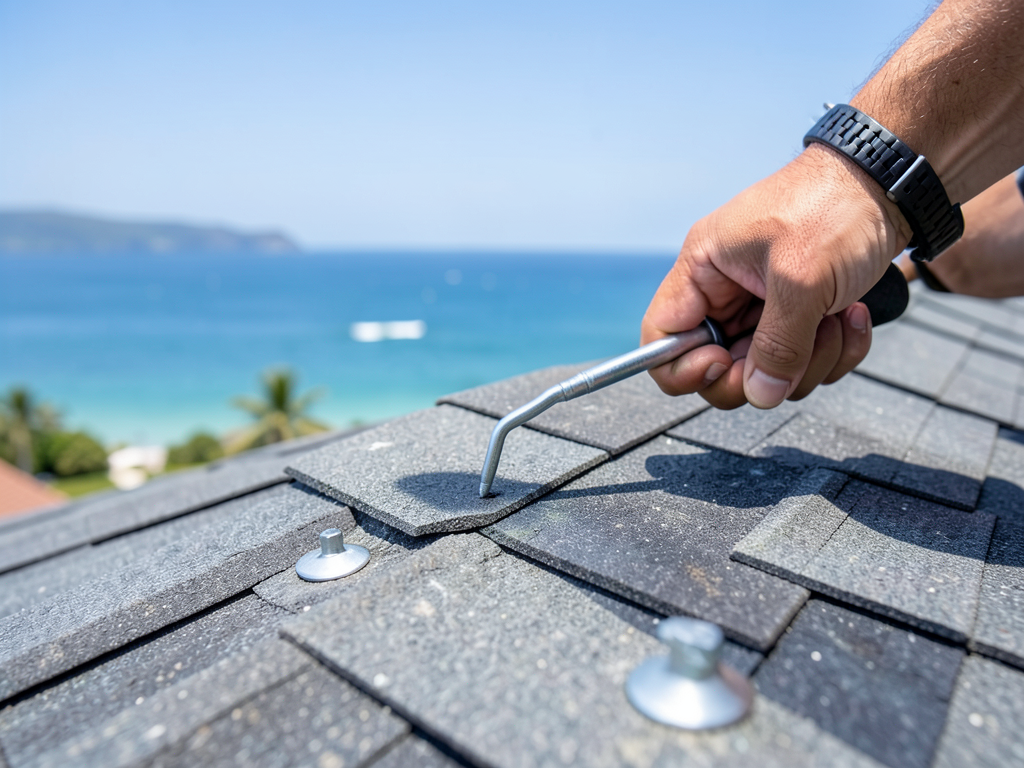
Visual Aid: Diagram showing cross-section of corroded galvanized nail vs. intact 316 stainless nail in salt spray environment.

Visual Aid: Close-up photo of ring-shank 316 stainless steel roofing nails showing the textured shank pattern that prevents withdrawal.
Visual Aid: Moisture meter reading chart comparing roof deck moisture levels in roofs with galvanized vs. 316 stainless fasteners after 5 years.
- Check Contractor Documentation
Request material certifications showing 316-grade stainless steel compliance with FBC Chapter 15.
- Inspect Nail Heads
Look for silver-gray color and smooth finish. Avoid any nails showing rust spots or discoloration.
- Verify Ring-Shank Design
Ring-shank nails have a textured surface that prevents withdrawal under wind loads.
Cost Comparison: Galvanized vs. 316 Stainless Over 20 Years
| Fastener Type | Initial Cost | Lifespan in Coastal Areas | Replacement Cost at 5 Years | Total 20-Year Cost |
|---|---|---|---|---|
| Hot-Dipped Galvanized | $800 | 3-5 years | $12,000 (full roof replacement) | $12,800 |
| 304 Stainless | $1,040 | 8-10 years | $3,000 (partial repair) | $4,040 |
| 316 Marine Grade | $1,120 | 15-20+ years | $0 | $1,120 |
Local Case Study: Rocky Point Roof Failure Due to Improper Fasteners
A 2024 inspection of a 4-year-old roof in the Rocky Point area revealed extensive fastener corrosion. The home used standard galvanized nails, which failed within 36 months. Water intrusion caused $8,200 in interior damage to ceilings and walls. The homeowner’s insurance denied the claim, citing non-compliant materials. A full replacement using 316 stainless fasteners cost $15,400. This case demonstrates why the 2-4% premium for proper hardware is a fraction of potential repair costs. Affordable Roof Replacement Solutions for Homeowners in Riverview.
Frequently Asked Questions
Can I use aluminum nails instead of stainless steel?
Aluminum nails are not approved for coastal roofing in Florida. They lack the tensile strength and withdrawal resistance required by FBC Chapter 15 for HVHZ areas. Aluminum also suffers from galvanic corrosion when in contact with dissimilar metals commonly found in roofing systems. Choosing the Best Roofing Contractor for Your Westchase Home.
How can I tell if my current roof uses the right fasteners?
Schedule a professional inspection with a moisture meter test. A qualified roofer can check nail heads for rust, verify fastener type, and assess withdrawal resistance. Look for silver-gray nails with ring-shank patterns. If you see rust spots or smooth-shank nails, your roof likely needs replacement.
Does the FBC requirement apply to all coastal homes?
The requirement applies to homes within 1,500 feet of the mean high-water line in HVHZ areas. Rocky Point falls within this zone, making 316 stainless steel fasteners mandatory. Homes further inland may use 304-grade fasteners, but 316 provides superior protection even in these areas.
What happens if I sell my home and the roof doesn’t meet code?
Buyers and their inspectors will check for FBC compliance. Non-compliant roofs can derail sales or require costly retrofits before closing. Some lenders also require code compliance verification before approving mortgages on coastal properties.
Don’t let improper fasteners destroy your roof investment. Call (656) 245-0955 today to schedule your inspection and ensure your Rocky Point home meets Florida Building Code requirements. Our team uses only 316 marine-grade stainless steel fasteners and provides full documentation for insurance and warranty purposes. Pick up the phone and call (656) 245-0955 before the next storm hits. For more information, visit ASTM G85 Salt Spray Testing Standard.
You may also find this helpful. Architectural Shingles vs Luxury Designer Shingles for Boosting Curb Appeal in Culbreath Isles.
You may also find this helpful. Does a Metal Roof Actually Make Your House Louder During a Tampa Storm?.
{
“@context”: “https://schema.org”,
“@type”: “BlogPosting”,
“headline”: “Why Coastal Homes in Rocky Point Need Stainless Steel Roofing Nails to Prevent Rust”,
“description”: “Salt air corrodes standard nails in 2-3 years. Learn why 316 marine-grade stainless steel fasteners are mandatory for Rocky Point coastal homes to prevent roof failure.”,
“wordCount”: 1061,
“datePublished”: “2026-05-09T08:59:00.000Z”,
“dateModified”: “2026-05-09T08:59:00.000Z”,
“inLanguage”: “en-US”,
“mainEntityOfPage”: {
“@type”: “WebPage”,
“@id”: “https://crestlineroofingtampa.com”
},
“publisher”: {
“@type”: “LocalBusiness”,
“name”: “Crestline Roofing Tampa”,
“url”: “https://crestlineroofingtampa.com”
},
“author”: {
“@type”: “Organization”,
“name”: “Crestline Roofing Tampa”,
“url”: “https://crestlineroofingtampa.com”
},
“image”: {
“@type”: “ImageObject”,
“url”: “https://crestlineroofingtampa.com/wp-content/uploads/2026/03/why-coastal-homes-in-rocky-point-need-stainless-st-1.png”
}
}
{
“@context”: “https://schema.org”,
“@type”: “RoofingContractor”,
“name”: “Crestline Roofing Tampa”,
“url”: “https://crestlineroofingtampa.com”,
“address”: {
“@type”: “PostalAddress”,
“addressLocality”: “Tampa”
},
“areaServed”: {
“@type”: “City”,
“name”: “Tampa”
}
}
{
“@context”: “https://schema.org”,
“@type”: “FAQPage”,
“mainEntity”: [
{
“@type”: “Question”,
“name”: “304 vs. 316 Stainless Steel: Which Grade Do You Need?”,
“acceptedAnswer”: {
“@type”: “Answer”,
“text”: “304 stainless steel contains chromium and nickel but lacks molybdenum, making it vulnerable to chloride pitting in coastal environments. 316 marine-grade stainless includes molybdenum, which forms a protective barrier against salt water corrosion. For Rocky Point homes, 316 is the only grade that meets Florida Building Code Section 1504.1.4 for High Velocity Hurricane Zones (HVHZ). The 2-4% cost premium translates to a 15-20 year longer lifespan in coastal conditions.”
}
},
{
“@type”: “Question”,
“name”: “Can I use aluminum nails instead of stainless steel?”,
“acceptedAnswer”: {
“@type”: “Answer”,
“text”: “Aluminum nails are not approved for coastal roofing in Florida. They lack the tensile strength and withdrawal resistance required by FBC Chapter 15 for HVHZ areas. Aluminum also suffers from galvanic corrosion when in contact with dissimilar metals commonly found in roofing systems. Choosing the Best Roofing Contractor for Your Westchase Home.”
}
},
{
“@type”: “Question”,
“name”: “How can I tell if my current roof uses the right fasteners?”,
“acceptedAnswer”: {
“@type”: “Answer”,
“text”: “Schedule a professional inspection with a moisture meter test. A qualified roofer can check nail heads for rust, verify fastener type, and assess withdrawal resistance. Look for silver-gray nails with ring-shank patterns. If you see rust spots or smooth-shank nails, your roof likely needs replacement.”
}
},
{
“@type”: “Question”,
“name”: “Does the FBC requirement apply to all coastal homes?”,
“acceptedAnswer”: {
“@type”: “Answer”,
“text”: “The requirement applies to homes within 1,500 feet of the mean high-water line in HVHZ areas. Rocky Point falls within this zone, making 316 stainless steel fasteners mandatory. Homes further inland may use 304-grade fasteners, but 316 provides superior protection even in these areas.”
}
},
{
“@type”: “Question”,
“name”: “What happens if I sell my home and the roof doesn’t meet code?”,
“acceptedAnswer”: {
“@type”: “Answer”,
“text”: “Buyers and their inspectors will check for FBC compliance. Non-compliant roofs can derail sales or require costly retrofits before closing. Some lenders also require code compliance verification before approving mortgages on coastal properties.”
}
}
]
}
{
“@context”: “https://schema.org”,
“@type”: “HowTo”,
“name”: “How to Verify Your Roof Uses Proper Fasteners”,
“step”: [
{
“@type”: “HowToStep”,
“position”: 1,
“name”: “Check Contractor Documentation”,
“text”: “Request material certifications showing 316-grade stainless steel compliance with FBC Chapter 15.”
},
{
“@type”: “HowToStep”,
“position”: 2,
“name”: “Inspect Nail Heads”,
“text”: “Look for silver-gray color and smooth finish. Avoid any nails showing rust spots or discoloration.”
},
{
“@type”: “HowToStep”,
“position”: 3,
“name”: “Verify Ring-Shank Design”,
“text”: “Ring-shank nails have a textured surface that prevents withdrawal under wind loads.”
}
],
“image”: “https://crestlineroofingtampa.com/wp-content/uploads/2026/03/why-coastal-homes-in-rocky-point-need-stainless-st-1.png”
}
{
“@context”: “https://schema.org”,
“@type”: “BreadcrumbList”,
“itemListElement”: [
{
“@type”: “ListItem”,
“position”: 1,
“name”: “Home”,
“item”: “https://crestlineroofingtampa.com”
},
{
“@type”: “ListItem”,
“position”: 2,
“name”: “Blog”,
“item”: “https://crestlineroofingtampa.com/blog”
},
{
“@type”: “ListItem”,
“position”: 3,
“name”: “Why Coastal Homes in Rocky Point Need Stainless Steel Roofing Nails to Prevent Rust”
}
]
}
{
“@context”: “https://schema.org”,
“@type”: “Service”,
“serviceType”: “Roofing”,
“provider”: {
“@type”: “LocalBusiness”,
“name”: “Crestline Roofing Tampa”,
“url”: “https://crestlineroofingtampa.com”
},
“areaServed”: {
“@type”: “City”,
“name”: “Tampa”
},
“description”: “Salt air corrodes standard nails in 2-3 years. Learn why 316 marine-grade stainless steel fasteners are mandatory for Rocky Point coastal homes to prevent roof failure.”
}