Why Hip Roofs Get Better Insurance Rates in Tampa (And How to Prove Yours Qualifies)
Tampa homeowners pay some of the highest insurance premiums in the nation, but many don’t realize their roof shape could be costing them hundreds of dollars annually. A hip roof design can qualify you for significant wind mitigation discounts on your homeowners insurance, potentially saving you 30-50% on the wind portion of your premium. This comprehensive guide explains exactly what makes hip roofs superior for Florida’s hurricane conditions and how to prove your roof qualifies for these substantial savings. Florida Building Code High Velocity Hurricane Zone.
What Makes a Hip Roof Different from Other Roof Types?
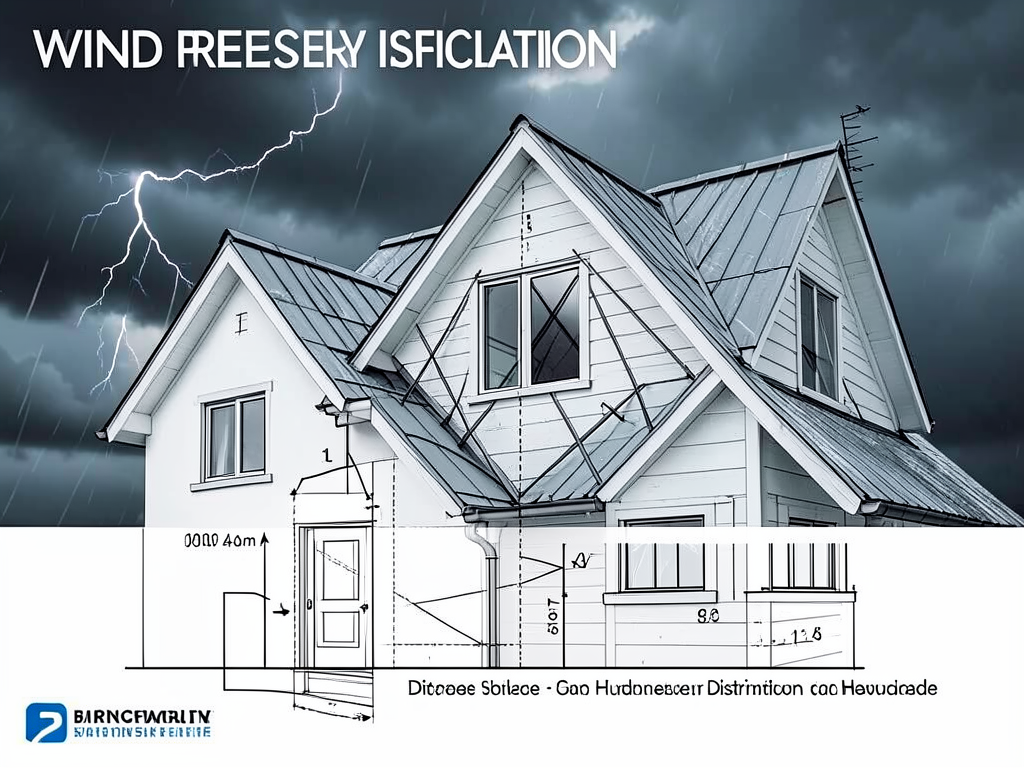
A hip roof slopes downward on all four sides, creating a pyramid-like shape where all exterior walls bear equal weight. Unlike gable roofs that have two sloped sides and two vertical triangular ends, hip roofs feature no vertical faces exposed to wind pressure. This geometric difference translates directly to superior wind resistance during Tampa’s frequent tropical storms and hurricanes.
During high-wind events, gable ends act like sails, catching wind pressure that can cause uplift forces exceeding 100 pounds per square foot. Hip roofs distribute wind forces more evenly across all surfaces, reducing the risk of catastrophic failure. The continuous slope creates a more aerodynamic profile that allows wind to flow over the structure rather than against it.
The Florida Building Code specifically recognizes hip roof superiority in wind-prone regions. Section 1609.1.1 of the FBC requires additional engineering for gable roofs in high-velocity hurricane zones, while hip roofs receive more favorable treatment in wind load calculations. This isn’t just theoretical—insurance companies base their premium discounts on documented wind resistance performance. Navigating Roof Insurance Claims After a Storm in Tampa.
How Much Can You Actually Save with a Hip Roof in Tampa?
The wind mitigation discount for hip roofs varies by carrier but typically ranges from 15% to 45% off the windstorm portion of your premium. For a typical Tampa home with a $3,500 annual premium where wind coverage represents about 60% of the total, this translates to annual savings between $315 and $945.
Citizens Property Insurance Corporation, Florida’s largest insurer, offers some of the most generous hip roof credits. Their wind mitigation guidelines provide up to 45% credit when the roof meets specific geometric requirements. Private carriers like State Farm and Citizens often match or exceed these percentages for properly documented hip roofs.
The savings calculation depends on several factors:
- Roof pitch angle (typically 4:12 to 6:12 pitch qualifies best)
- Percentage of hip versus non-hip features
- Age and condition of roofing materials
- Quality of installation and adherence to current building codes
- Secondary water resistance and roof-to-wall connection methods
The Wind Mitigation Inspection Process: Form OIR-B1-1802 Explained
The key to unlocking your hip roof discount is the Uniform Mitigation Verification Inspection, documented on Form OIR-B1-1802. This standardized form, mandated by Florida law, allows insurance companies to verify wind-resistant features and apply appropriate credits to your premium. OIR-B1-1802 Wind Mitigation Inspection Form.
The inspection process involves a licensed inspector or qualified contractor examining seven specific categories:
- Building code compliance year
- Roof covering material and age
- Roof deck attachment method
- Roof-to-wall connection type
- Roof geometry (hip vs. non-hip)
- Secondary water resistance
- Opening protection (impact windows/doors)
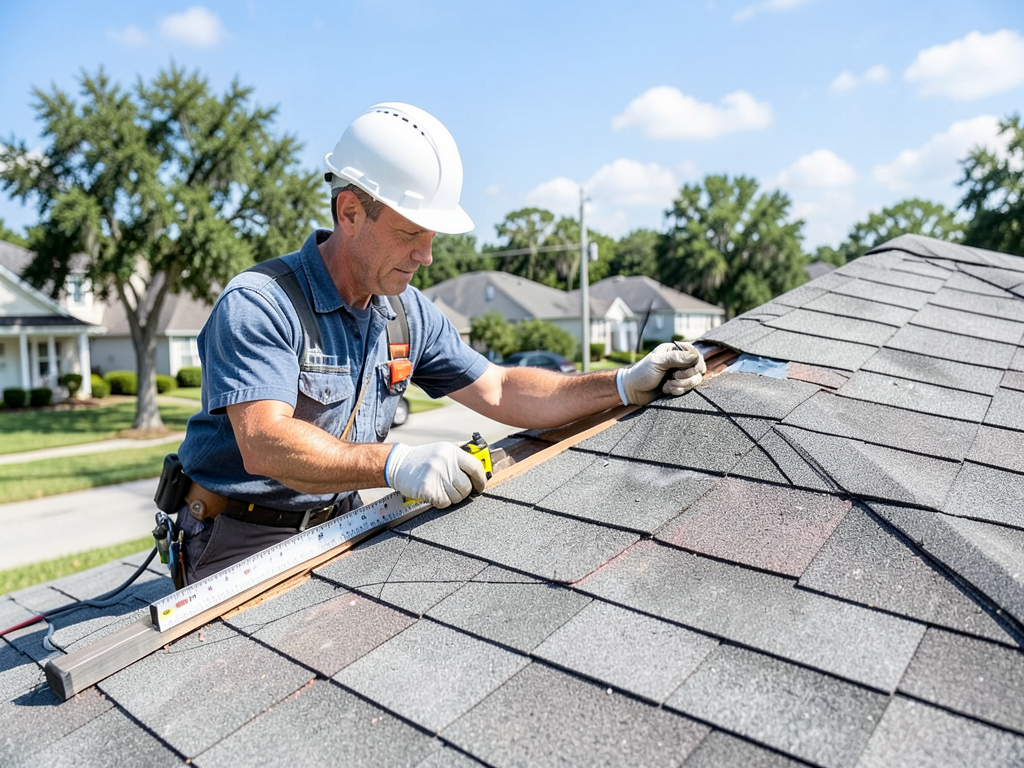
For hip roof qualification, the inspector measures the roof’s perimeter and calculates the ratio of hip length to total eave length. The roof must have at least 10% hip features to qualify for any credit, with maximum discounts requiring 90% or greater hip geometry. This measurement happens at the eave level, so architectural features like dormers or decorative gables don’t necessarily disqualify the roof if the primary structure maintains hip characteristics.
During the inspection, the technician uses specialized tools to verify construction methods. They’ll check nail spacing in the roof deck using a resistance drill, examine strap connections at the wall plate, and verify secondary water barriers under the primary roofing material. Each verified feature adds to your potential discount, with the hip roof geometry often providing the largest single credit. Choosing the Best Roofing Contractor for Your Westchase Home.
Secondary Water Resistance and Other Discount Multipliers
While the hip roof geometry provides the foundation for wind mitigation discounts, combining it with other wind-resistant features can maximize your savings. Secondary Water Resistance (SWR) involves installing a self-adhering polymer modified bitumen layer over the entire roof deck before applying shingles or tiles. This creates a secondary barrier that prevents water intrusion even if the primary roof covering fails.
Roof-to-wall connections represent another critical discount category. Modern installations use hurricane straps, clips, or embedded connectors that tie the roof structure directly to the building’s frame. These connections must meet specific uplift resistance ratings measured in pounds per square foot. A typical hip roof with straps and SWR can qualify for 70-85% of the maximum available wind mitigation credits.
The age of your roof also impacts discounts. Roofs installed after March 1, 2002, must meet the Florida Building Code’s High Velocity Hurricane Zone standards, which include stricter requirements for hip geometry, connection methods, and material specifications. Older roofs may still qualify for partial credits if they meet current standards during replacement or repair. Affordable Roof Replacement Solutions for Homeowners in Riverview.
Tampa-Specific Wind Zone Considerations
Hillsborough County falls within Wind Borne Debris Regions where basic wind speeds can exceed 140 mph. The Florida Building Code’s Tampa Bay area provisions require enhanced construction standards for new roofs and major repairs. These local requirements actually work in your favor when seeking insurance discounts.
The county’s elevation and proximity to Tampa Bay create unique wind patterns during storms. Buildings in coastal A zones must withstand both direct wind pressure and wind-driven water forces. Hip roofs perform exceptionally well in these conditions because their geometry reduces both pressure coefficients and uplift forces compared to gable designs.
Local building departments in Tampa, Brandon, and surrounding communities have documented hip roof performance during recent hurricanes. Post-storm assessments show hip roofs experience 60-70% less damage than comparable gable roofs in similar wind conditions. This real-world performance data directly influences insurance companies’ discount structures.
Another Tampa-specific factor involves the age of housing stock. Many homes in neighborhoods like Seminole Heights and West Tampa were built before modern wind codes. Converting these gable roofs to hip designs during replacement not only improves storm performance but also qualifies for the full spectrum of insurance credits available under current Florida statutes.
Converting a Gable Roof to Hip: Costs and Benefits Analysis
Homeowners with existing gable roofs often wonder if conversion to hip geometry justifies the investment. The conversion process typically adds $3,000 to $8,000 to a roof replacement project, depending on roof size and complexity. This investment can pay for itself within 3-5 years through insurance premium reductions.
The conversion involves extending rafters from the ridge to the corners, creating the characteristic hip slope. This requires modifying the roof structure, adding new sheathing, and ensuring proper ventilation. The additional material costs include extended rafters, extra sheathing, and modified ridge beam requirements. However, the structural benefits extend beyond insurance savings.
Hip roofs provide better attic ventilation due to their continuous slope design. This reduces heat buildup and moisture accumulation, potentially lowering cooling costs by 10-15% in Tampa’s hot climate. The improved airflow also extends the life of roofing materials by reducing thermal cycling stress. Roofing Dunedin.
Another consideration involves property value. Real estate appraisers recognize hip roof construction as a premium feature in Florida’s coastal markets. Homes with documented wind mitigation features, including hip geometry, often appraise 3-5% higher than comparable properties with standard construction. This appreciation can offset the conversion cost while providing ongoing insurance savings.
Common Myths About Hip Roof Insurance Discounts
Myth #1: Only new roofs qualify for hip roof discounts. Reality: Any roof meeting current geometric requirements qualifies, regardless of age. The key is the 10% hip-to-eave ratio measurement, not installation date.
Myth #2: Converting to a hip roof requires complete roof replacement. Reality: Partial conversions are possible during repairs or re-roofing, though full replacement provides the best return on investment.
Myth #3: All insurance companies offer the same hip roof discounts. Reality: Discount structures vary significantly between carriers. Some specialize in coastal properties and offer enhanced credits for hip geometry combined with other wind-resistant features.
Myth #4: The inspection is just a formality. Reality: Wind mitigation inspections require specific training and tools. Improper inspections can miss qualifying features or document them incorrectly, costing you potential savings.
Myth #5: Once you get the discount, it’s permanent. Reality: Most carriers require re-inspection every 5-7 years or after major repairs. Building code changes and updated discount structures can affect your qualifying credits over time.
Frequently Asked Questions
How long does a wind mitigation inspection take?
A thorough wind mitigation inspection typically requires 1-2 hours for a standard single-family home. The inspector must access the attic, measure roof geometry, examine connections, and document findings on the OIR-B1-1802 form. Complex roofs or those with limited access may require additional time. Finding a Reliable Tile Roof Repair Specialist in South Tampa.
Can I perform my own wind mitigation inspection?
No. Florida law requires wind mitigation inspections to be performed by licensed professionals including building code inspectors, architects, engineers, or contractors with specific training. The inspector must carry appropriate liability insurance and document their qualifications on the inspection form.
Is the hip roof discount retroactive?
The discount applies when you submit the inspection form to your insurance carrier. However, some companies may only apply credits starting from your next renewal date. Others might offer retroactive application for up to 90 days with proper documentation.
What if my roof is partially hip and partially gable?
The 10% rule applies to the overall roof geometry. If at least 10% of your roof’s eave length consists of hip features, you qualify for partial credits. The percentage of hip features directly correlates to the size of your discount, with 90%+ hip geometry receiving maximum credits.
How often should I update my wind mitigation inspection?
Most insurance companies require updates every 5 years or after major repairs. However, if you make significant improvements like adding hurricane straps or secondary water resistance, you should submit a new inspection to capture additional credits immediately.
Getting Started: Your Path to Hip Roof Savings
The first step toward maximizing your insurance savings involves scheduling a professional wind mitigation inspection. A qualified inspector will evaluate your current roof geometry, identify qualifying features, and document everything on the OIR-B1-1802 form. This inspection typically costs $100-200 but can save you thousands over the life of your roof.
If your current roof doesn’t qualify for maximum discounts, consider timing your next replacement strategically. Many homeowners coordinate roof replacement with other major home improvements to minimize disruption and maximize overall value. A roof replacement with hip geometry conversion, hurricane straps, and secondary water resistance typically costs $8,000-15,000 for an average Tampa home but can reduce insurance premiums by $500-1,000 annually.
Don’t wait until storm season to address your roof’s wind resistance. The time to act is now, before the next hurricane threatens Tampa Bay. Call (656) 245-0955 today to schedule your wind mitigation inspection and discover exactly how much you could be saving on your homeowners insurance. Our experienced team understands Hillsborough County’s specific requirements and can help you navigate the inspection process to ensure you receive every credit you deserve.
Whether you need a simple inspection to verify your current roof’s qualifications or a complete replacement to maximize your insurance savings, we’re here to help. Our expertise in Florida Building Code compliance and wind mitigation documentation means you’ll get accurate information and professional service from start to finish. Don’t leave money on the table—call (656) 245-0955 now and take the first step toward lower insurance premiums and better storm protection for your Tampa home.